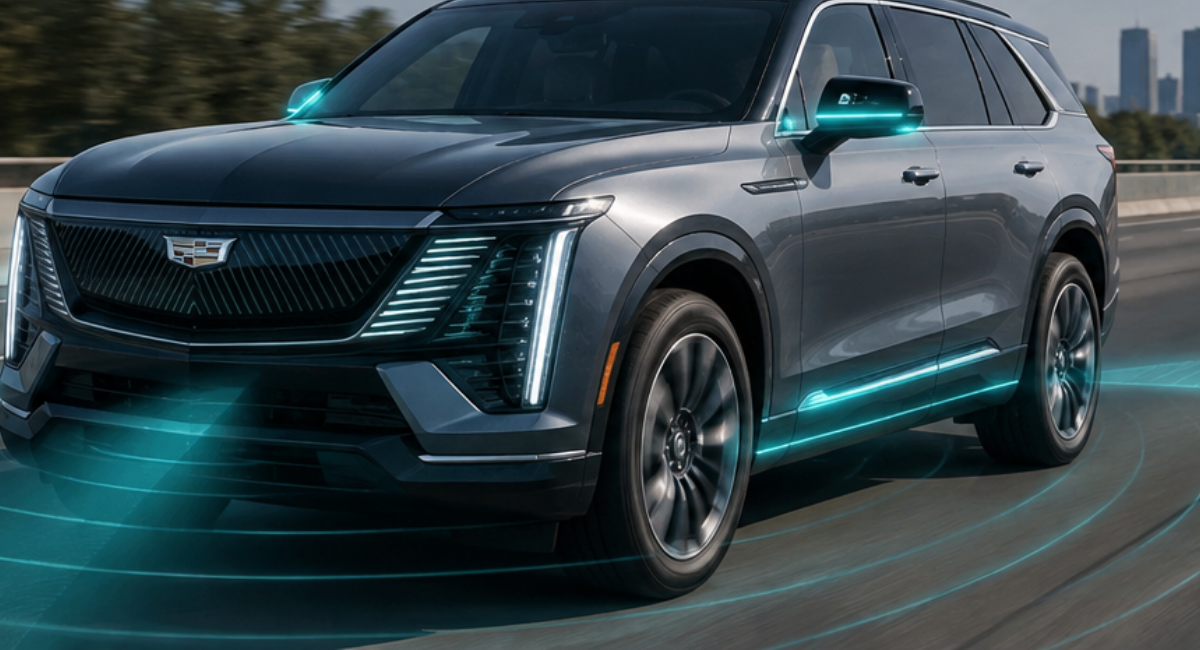

Robotaxis coverage tends to swing between two extremes: dismissing the technology as still experimental, or treating it as already available everywhere. Neither is accurate heading into the second half of 2026. Driverless ride-hailing now operates commercially in a specific, growing list of US cities, while most of the country still has none.
The City List, Without The Hype
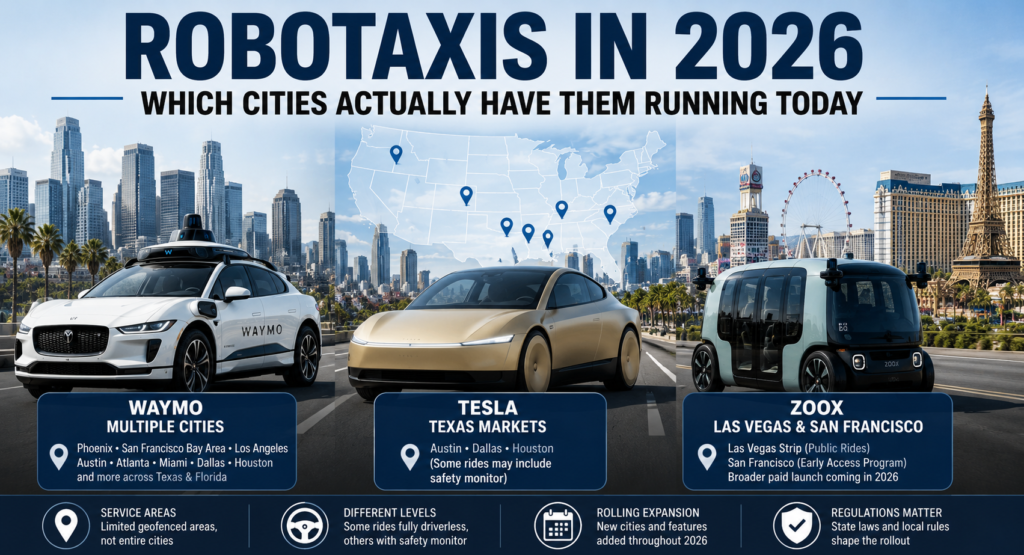
Waymo operates the widest US footprint by far, offering public driverless rides across roughly a dozen metro areas, including Phoenix, the San Francisco Bay Area, Los Angeles, Austin, Atlanta, Miami, and several Texas and Florida cities added through 2026. Coverage within each metro is limited to a defined service area, not the entire city, and some features, like freeway riding, have been paused in specific markets pending software updates.
Tesla’s robotaxi service operates on a much narrower footprint, limited to Texas markets including Austin, Dallas, and Houston as of mid-2026, with rides in some markets still requiring an onboard safety monitor rather than running fully unsupervised. Zoox, owned by Amazon, runs public rides on the Las Vegas Strip and an early-access program in San Francisco, with a broader paid launch targeted for later in 2026.
Technician’s Note: Before assuming a city has robotaxi service, check that the coverage area actually includes the specific address in question. A metro-area headline does not mean pickup and drop-off works citywide, since most services still operate inside a defined geofence.
Why “Operating In A City” Means Different Things
Not every service in a given city offers the same experience. Some robotaxi programs still require a human safety operator behind the wheel or in the passenger seat, ready to intervene. Others run genuinely driverless, with no human control input available at all. A single city can host both types simultaneously, from different companies, which makes a simple yes-or-no answer to “does this city have robotaxis” misleading without more context.
Motional’s Las Vegas pilot, for example, runs as a supervised service on a ride-hailing app, distinct from Zoox’s fully driverless Strip service operating in the same city.
What’s Still Mostly Testing, Not Commercial Service
Several additional US cities have hosted testing or mapping activity without offering rides open to the general public. That distinction matters for anyone hoping to book a ride rather than simply spot a test vehicle on the road. A company operating test vehicles in a market is not the same as that company offering commercial service there.
Outside the US, driverless ride-hailing has expanded further and faster in parts of China and the Middle East, where regulatory approval has moved more quickly than in most American markets. That international pace does not change what is actually bookable within the United States today.
The Regulatory Piece Driving City-By-City Rollout
State-level rules, not just company readiness, determine where and how fast robotaxis expand. Texas, for instance, enacted a state law establishing an authorization requirement for commercial driverless operation, which took effect months after the underlying law was signed. That kind of state-level gating explains why expansion happens market by market rather than nationwide all at once, even for a company with fully developed technology.
Reading Robotaxi News Without Getting Fooled
A company announcing plans to enter a city is not the same as that city having active service. Treating “coming soon” language and “now operating” language as equivalent is the single most common way robotaxi coverage misleads readers. Checking whether rides are open to the general public, not just employees or waitlisted testers, separates real availability from a roadmap.
Common Questions About Robotaxis In 2026
Which company currently has the widest robotaxi coverage in the US? Waymo operates the largest footprint, with public driverless rides across roughly a dozen US metro areas as of mid-2026. Its coverage areas are defined geofences within each city, not full citywide service.
Are all robotaxi rides in a given city fully driverless? Not necessarily. Some services still require an onboard human safety operator, while others run with no human control input at all. A city can host both supervised and fully driverless services from different companies at the same time.
Does a company testing vehicles in a city mean rides are available there? No. Testing or mapping activity does not mean commercial service is open to the public. Confirming that a company offers bookable rides to general users, not just employees or waitlist participants, is the clearest way to check real availability.