


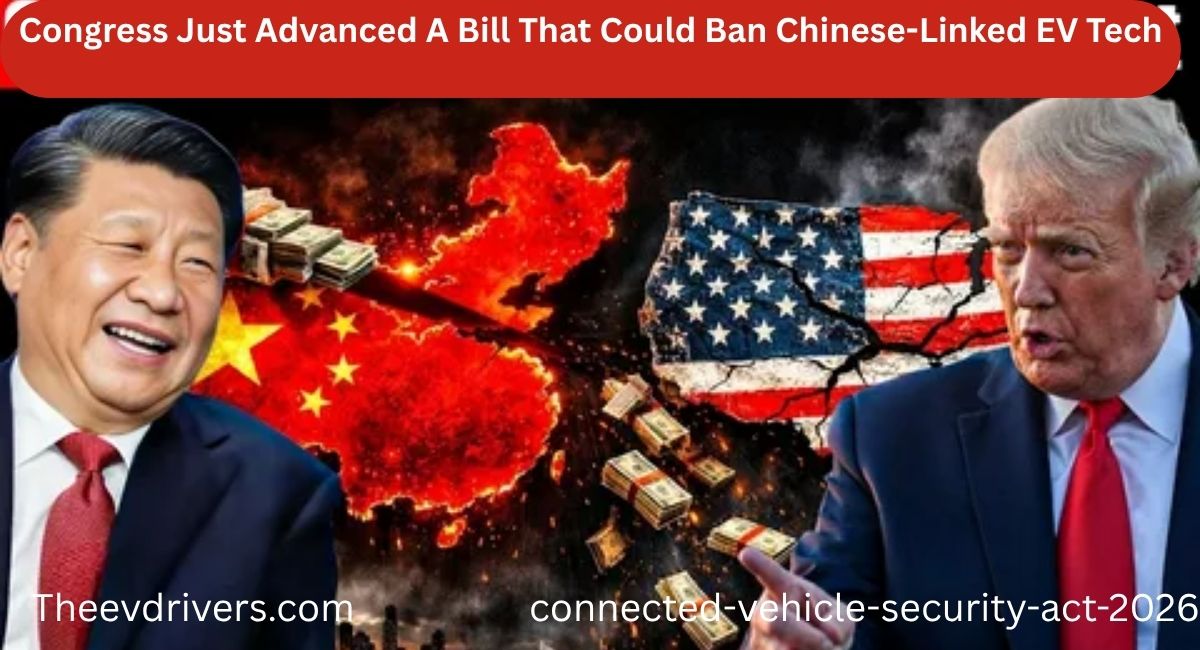
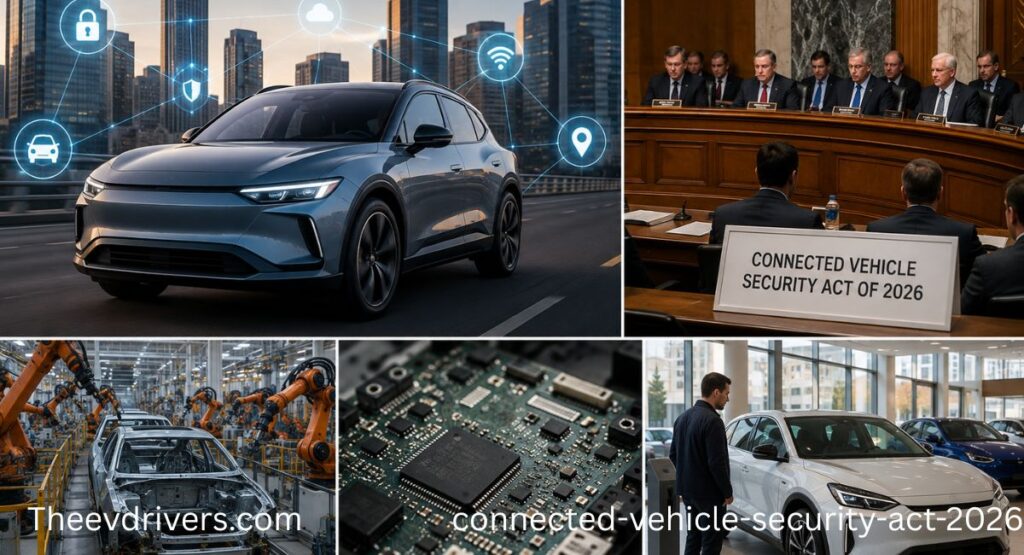
The Senate Commerce Committee passed the Connected Vehicle Security Act of 2026 with unanimous bipartisan support on July 22. Most coverage stopped at the headline vote. The bill’s foreign-ownership threshold reaches further than most automakers realize, and its restrictions phase in on two separate timelines that matter for anyone buying a connected vehicle.
What The Bill Actually Prohibits
The Connected Vehicle Security Act of 2026 would permanently prohibit the importation, manufacture, sale, and resale of connected vehicles, software, and hardware linked to China, Russia, Iran, or North Korea. Senators Bernie Moreno and Elissa Slotkin introduced the bill.
The bill’s vehicle and software restrictions take effect in 2027, and its hardware restrictions follow in 2030. That staggered timeline gives automakers a multi-year window to redesign supply chains before the hardware rules apply.
Why This Reaches Beyond Chinese Automakers
The bill sets its ownership threshold at 15 percent foreign ownership, a level broad enough to implicate certain European manufacturers carrying Chinese investor stakes, not just Chinese-branded vehicles directly.
Committee Chairman Ted Cruz named Mercedes-Benz directly during the markup session, citing that ownership structure specifically. That detail did not appear in most initial headline coverage of the committee vote.
Technician’s Note: Check a specific automaker’s investor disclosures for foreign ownership percentages before assuming a familiar brand is unaffected. Ownership stakes below the public radar can still cross a 15 percent threshold.
What Still Has To Happen Before This Becomes Law
Passing the Senate Commerce Committee marks only one step. The bill still needs a full Senate floor vote, and it must clear three separate House committees before reaching a president’s desk.
Unanimous committee advancement signals unusually strong bipartisan support at this stage. That support does not guarantee final passage, since floor votes and House committee negotiations can still reshape specific provisions.
What This Means For Buyers Right Now
Nothing changes for a 2026 purchase today. The earliest restrictions would not take effect until 2027, and only after the bill clears the Senate floor and three House committees.
Buyers concerned about long-term software support or hardware sourcing on a specific model can ask a dealer directly about a manufacturer’s current supply chain and ownership structure, since that information is not always obvious from the vehicle badge alone.
Common Questions About The Connected Vehicle Security Act
Does the Connected Vehicle Security Act only affect Chinese automakers?
No. Its 15 percent foreign-ownership threshold is broad enough to implicate certain European manufacturers with Chinese investor stakes, including Mercedes-Benz, which Committee Chairman Ted Cruz named directly during the markup.
When would the Connected Vehicle Security Act’s restrictions actually take effect?
Vehicle and software restrictions would begin in 2027, with hardware restrictions following in 2030, assuming the bill clears a full Senate floor vote and three House committees first.
Has the Connected Vehicle Security Act become law yet?
No. It passed the Senate Commerce Committee unanimously on July 22, 2026, but still requires a full Senate floor vote and passage through three House committees before taking effect.