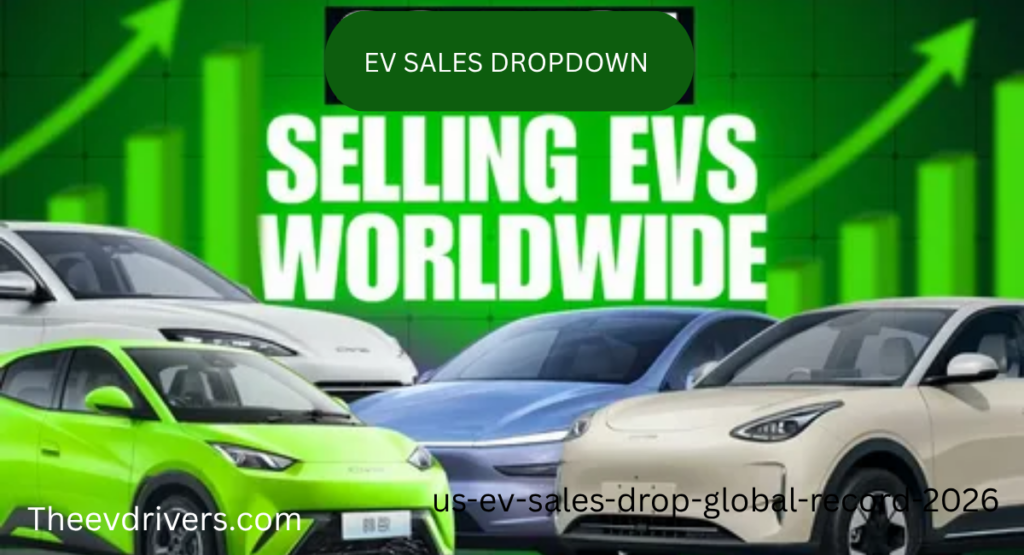
North American EV sales fell roughly 20 percent year-to-date through mid-2026. The expired federal tax credit and pullbacks from Ford and General Motors drove that decline. Global EV share tells a different story entirely: EV models now account for more than 27 percent of all cars sold worldwide in 2026, a record high most U.S. coverage never mentions alongside the domestic slump.
What’s Actually Happening In North America
North American EV sales fell roughly 20 percent year-to-date, reflecting the end of the federal tax credit, cooling early-adopter demand, and pullbacks from major legacy automakers including Ford and General Motors.
That decline followed a sharp Q1 drop, when new EV sales fell 28 percent compared to the same period in 2025. The slowdown has continued through the first half of the year rather than reversing.
What’s Happening Everywhere Else At The Same Time
BloombergNEF’s Electric Vehicle Outlook 2026 projects EVs will capture more than 27 percent of global car sales in 2026, up from 25 percent in 2025 and just 9 percent five years earlier.
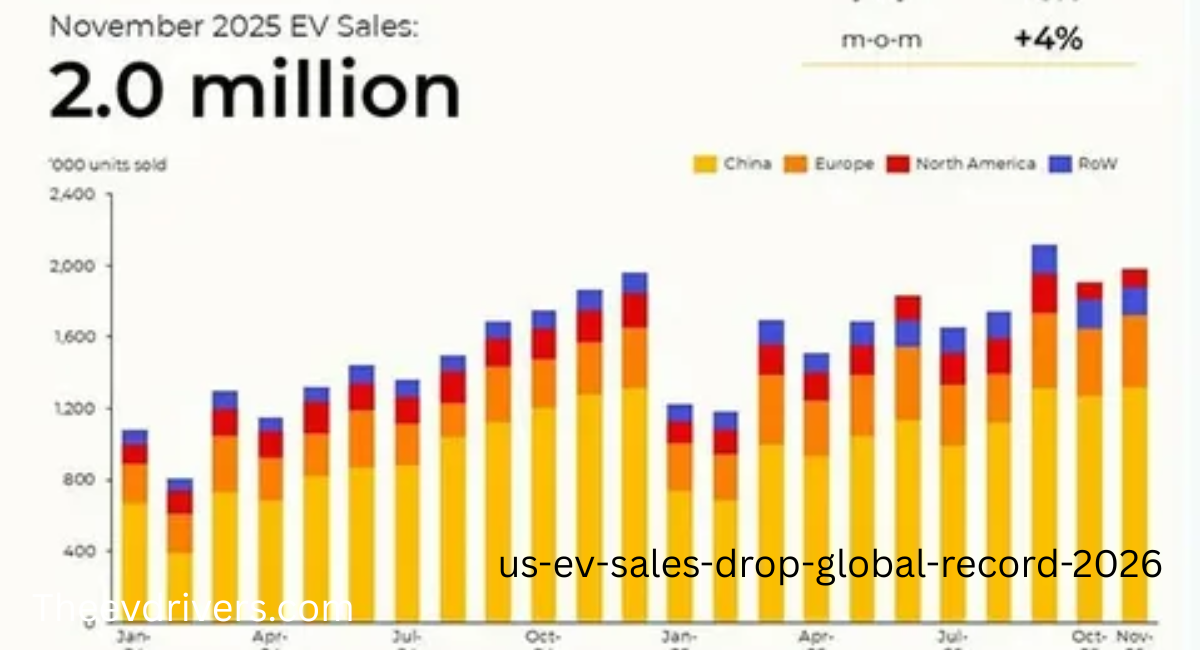
Global EV sales reached roughly 2.0 million units in a single recent month tracked by industry analysts. China held its EV share near 63 percent of its domestic market, and Europe climbed to roughly 32 percent in that same period.
Technician’s Note: Separate global EV percentage figures from unit-sales figures when comparing regions. A rising percentage share can still coexist with falling unit sales in a specific slower market like the United States.
Why The Two Numbers Aren’t Contradictory
The United States now represents a shrinking share of a growing global market, not a shrinking global market overall. China and Europe are absorbing the growth the U.S. market lost after its federal incentive expired.
U.S. sales fell around 19 percent in a recent month tracked globally, while China’s share rose modestly and Europe’s climbed sharply in the same period. That divergence points to a regional slowdown, not fading global interest in EVs.
What This Split Likely Means Going Forward
Analysts maintain a cautious tone heading into the second half of 2026 for the U.S. specifically, even as global projections stay constructive. Policy and pricing, not declining interest in electric vehicles, appear to drive the domestic slowdown.
Automakers with strong non-U.S. sales, including several Chinese and European brands, now face a different set of incentives than U.S.-focused manufacturers currently navigating discounting and inventory pressure at home.
Common Questions About US Vs. Global EV Sales
Are global EV sales actually declining in 2026?
No. Global EV sales are rising, with more than 27 percent of all cars sold worldwide in 2026 projected to be electric, a record share. The decline is specific to the North American market.
Why did North American EV sales drop 20% while global share hit a record?
The North American drop reflects the expired federal tax credit and automaker pullbacks specific to that region. Growth in China and Europe is offsetting that decline in the global figures.
Which region is driving the global EV sales record in 2026?
Europe and China are the primary drivers. Europe’s EV share climbed to roughly 32 percent in a recent tracked period, while China maintained around 63 percent of its domestic new-car market.
Related Reading
- Hybrids Are Absorbing The Momentum Pure EVs Lost In The US This Year
- Why EV Sales Dropped In Early 2026, Explained Simply
- Plug-In Hybrid Vs. Full EV In 2026