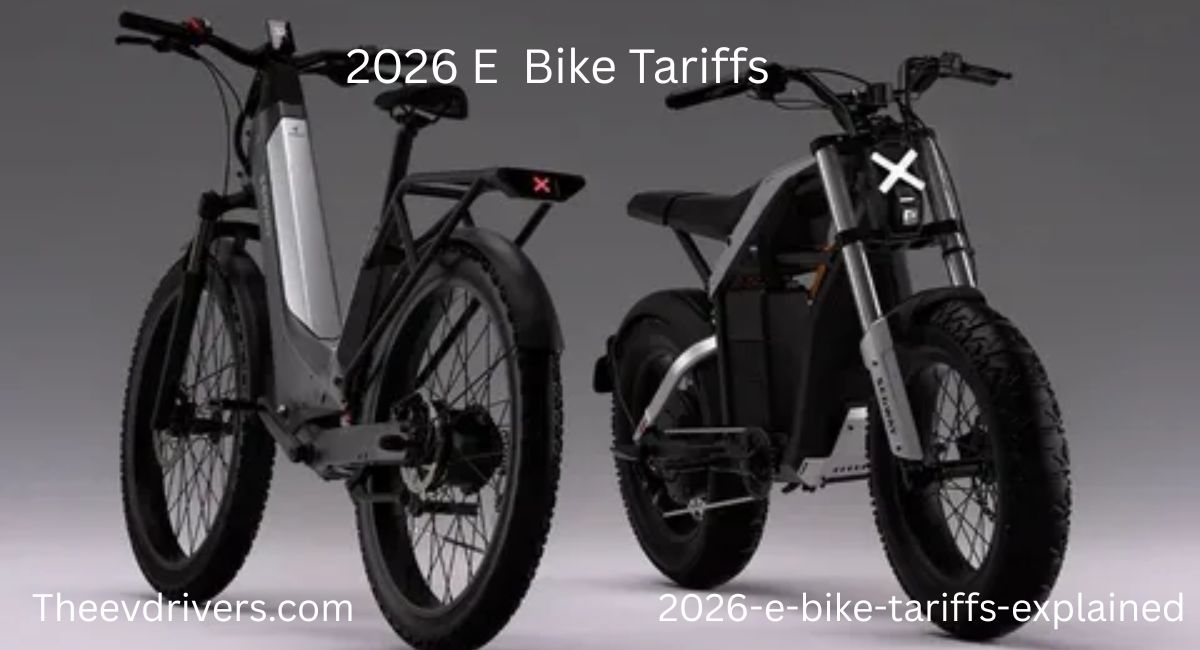


A new 25 percent tariff on standalone e-bike battery packs from China took effect in 2026, layering onto an existing 25 percent tariff on complete China-sourced e-bikes. Budget brands are responding by sourcing components from multiple countries to manage cost. That shift is quietly making Class 1, 2, and 3 labeling less reliable than it was even a year ago.
What Actually Changed With Tariffs In 2026
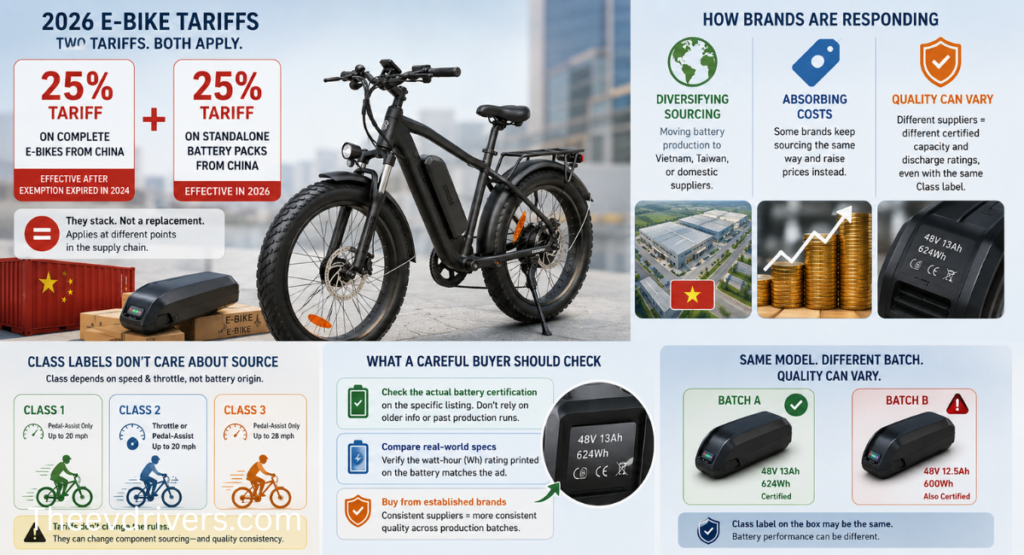
Standalone e-bike battery packs imported from China now face a new 25 percent tariff as of 2026. That charge stacks separately on top of the tariff already applied to complete China-sourced e-bikes, in place since an earlier exemption expired in 2024.
Those two tariffs compound rather than replace each other. A brand that assembles bikes domestically but sources battery packs from China now absorbs both cost pressures at different points in its supply chain.
How Budget Brands Are Responding
Some manufacturers are shifting battery sourcing to Vietnam, Taiwan, or domestic suppliers to sidestep the new pack-specific tariff, while others are absorbing the cost and raising prices instead.
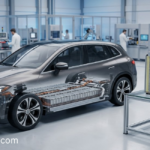
That sourcing shift changes more than cost alone. A battery pack swapped between suppliers can carry a different certified capacity or discharge rating, even when the bike’s outward specifications and Class label stay listed the same.
Technician’s Note: Compare the actual watt-hour rating printed on the battery itself against the advertised spec sheet before purchase. Sourcing changes sometimes shift real battery capacity slightly below what older marketing copy still states.
Why Class Labels Are Getting Less Reliable
Class 1, 2, and 3 e-bike designations depend on top assisted speed and whether the bike includes a throttle, not on battery source. Tariff policy does not directly change classification rules.
The practical risk runs differently: as budget brands juggle multiple suppliers to manage tariff costs, maintaining quality consistency within a single model line becomes harder across production batches, even while the Class label stays unchanged on the box.
What A Careful Buyer Should Check Now
Checking a specific listing’s current battery certification, not just its Class label, matters more in 2026 than before. A model that passed certification testing on an earlier production run does not guarantee every current unit matches.
Buying from an established brand with consistent supplier relationships reduces this risk more reliably than chasing the lowest advertised price on an unfamiliar budget listing.
Common Questions About E-Bike Tariffs And Class Labels
How do the new 2026 e-bike tariffs actually work?
A new 25 percent tariff applies specifically to standalone e-bike battery packs imported from China, stacking on top of an existing 25 percent tariff on complete China-sourced e-bikes that took effect after an exemption expired in 2024.
Do the new tariffs change an e-bike’s Class 1, 2, or 3 designation?
No. Class designation depends on top assisted speed and throttle presence, not battery sourcing or tariff status. The risk is inconsistent battery quality across production batches, not a changed classification.
Should buyers avoid budget e-bike brands because of the new tariffs?
Not necessarily, but checking current battery certification on a specific listing matters more now. Brands managing multiple suppliers to offset tariff costs can see quality vary across production runs of the same model.