







California’s SB 1271 took effect January 1, 2026, requiring e-bike batteries to meet UL 2849 or an equivalent standard. New York City takes a different approach entirely. Most coverage treats both cities as enforcing the same rule. They aren’t, and that distinction changes what a shopper should actually check on a listing.
Why California And New York Aren’t Actually Aligned
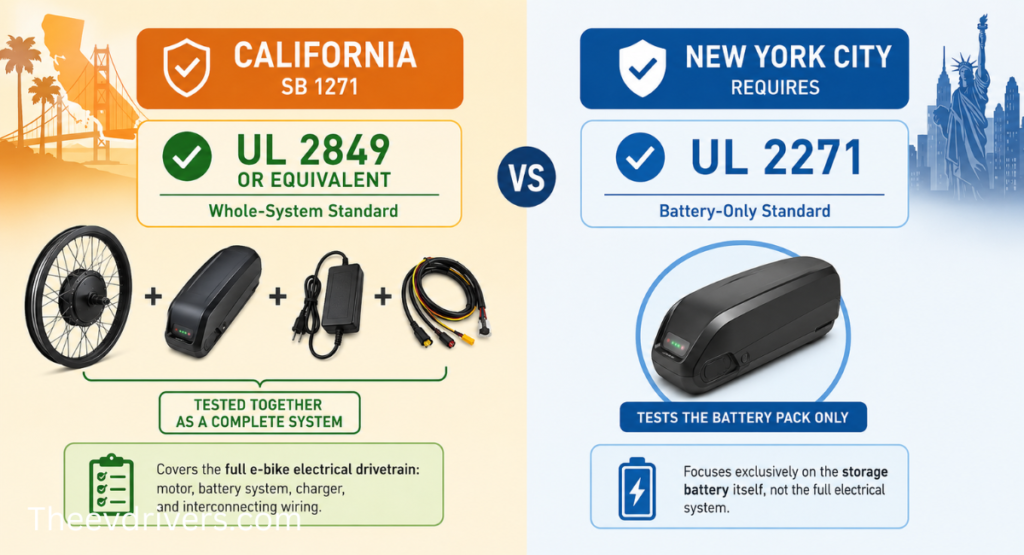
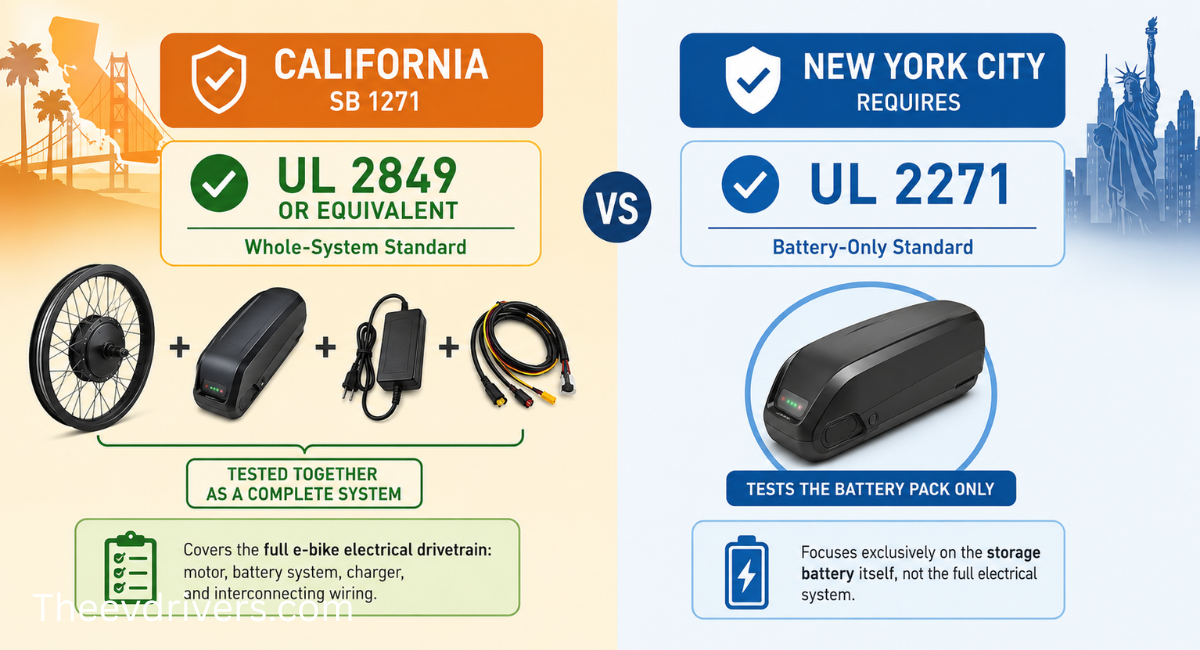
California’s SB 1271 requires e-bike batteries and electrical systems sold or leased in the state to pass testing by an accredited laboratory and comply with a recognized safety standard, specifically naming UL 2849 or an equivalent standard as acceptable.
New York City instead mandates UL 2271 specifically, the standard covering just the battery pack itself, and the city does not accept an equivalent standard the way California does. That narrower rule targets the battery alone, not the whole electrical system.
What Each Standard Actually Tests
UL 2849 tests an e-bike’s full electrical drivetrain system: the motor, the battery system, the charger combination, and the interconnecting wiring, evaluated together as one working system rather than as isolated parts.
UL 2271 tests the storage battery specifically, a standard originally written for light electric vehicle battery packs generally, not the complete bike electrical system UL 2849 evaluates.
Technician’s Note: Check which specific certification a listing claims, not just whether it says ‘UL certified.’ A battery-only UL 2271 mark does not satisfy California’s broader system-level requirement, and the reverse can apply in New York City.
Why This Distinction Matters For Buyers Right Now
New York City’s rule followed a documented public safety crisis. The city recorded 318 fires, 226 injuries, and 10 deaths from lithium-ion battery incidents during 2021 and 2022, a toll that prompted its earlier, narrower battery-focused mandate.
California’s newer, broader rule reflects a different regulatory approach, one that evaluates the whole electrical system rather than isolating the battery pack alone. Both rules address real fire risk, but neither city’s certification requirement automatically satisfies the other’s.
Where Other States Stand As Of Mid-2026
Outside California and New York, most states still lack a mandatory battery certification requirement, though additional legislation continues moving through several statehouses. New Jersey separately updated its own e-bike licensing and registration rules in 2026.
A shopper outside these two states still benefits from choosing a certified product, since certification remains the clearest signal of a properly tested battery and charging system, even where the law does not yet require it.
Common Questions About E-Bike Battery Certification Rules
Do California and New York City require the same e-bike battery certification?
No. California’s SB 1271 accepts UL 2849 or an equivalent whole-system standard. New York City specifically mandates UL 2271, a narrower battery-only standard, without accepting equivalents the way California does.
What’s the actual difference between UL 2849 and UL 2271?
UL 2849 tests an e-bike’s full electrical drivetrain: motor, battery, charger, and wiring together. UL 2271 tests only the storage battery pack itself, a narrower scope focused specifically on the battery.
Is e-bike battery certification required outside California and New York?
Not yet as mandatory law in most states, though additional legislation is moving through several statehouses. Choosing a certified product remains the clearest safety signal even where certification isn’t legally required.