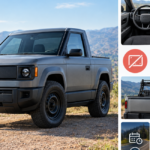




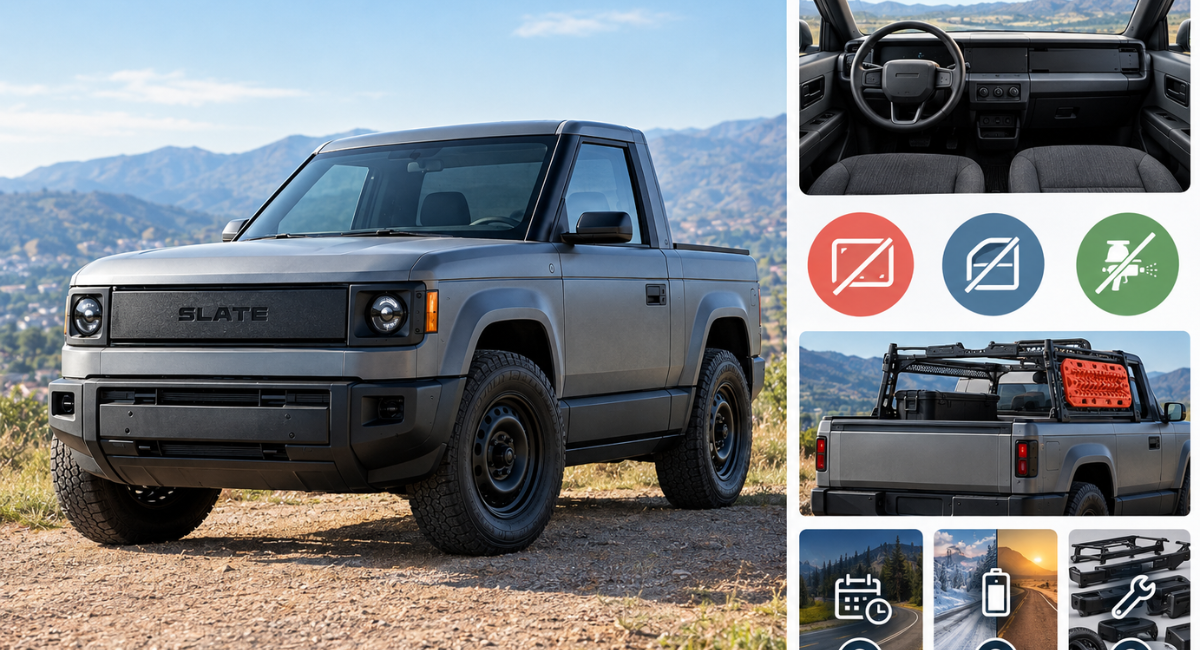
Every prior Slate Truck story ran on specifications and reservation counts alone. InsideEVs recently got behind the wheel for a genuine first drive, the first real test most readers have seen of the sub-$25,000 electric pickup. A hands-on test doesn’t just confirm marketing claims; it also reveals what a spec sheet alone can’t capture about a genuinely stripped-down vehicle.
What Changed Once An Actual Test Happened
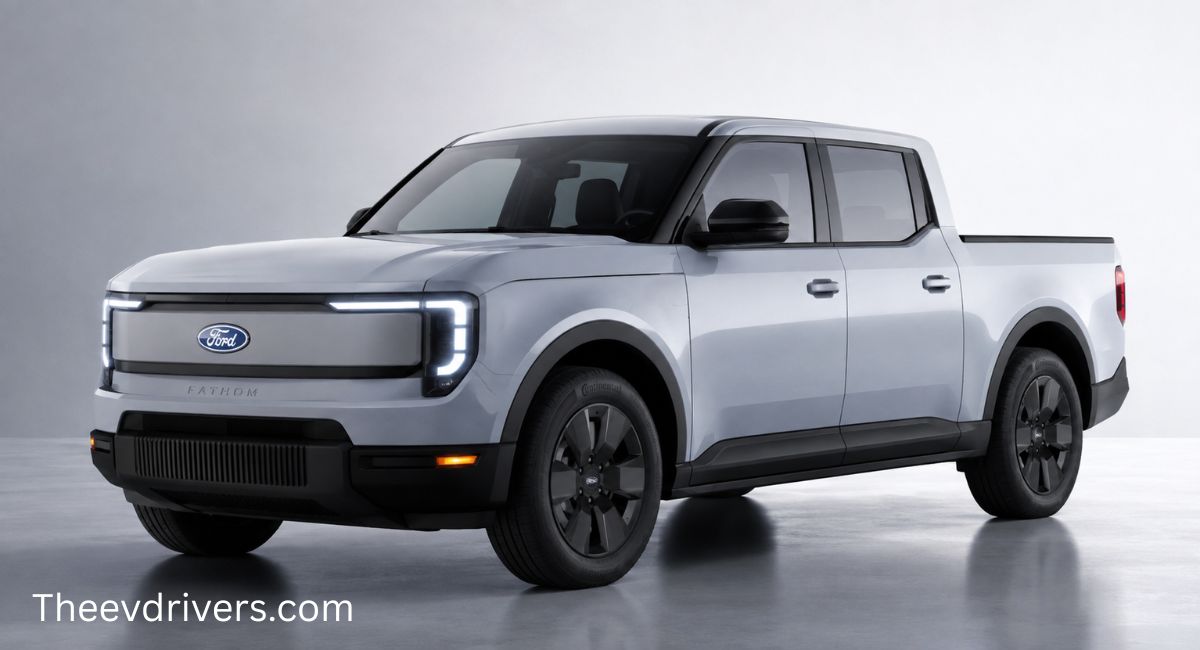
Prior Slate coverage relied entirely on manufacturer specifications, reservation numbers, and renderings, the same spec-sheet tier of coverage that still applies to competitors like Ford’s unreleased Fathom.
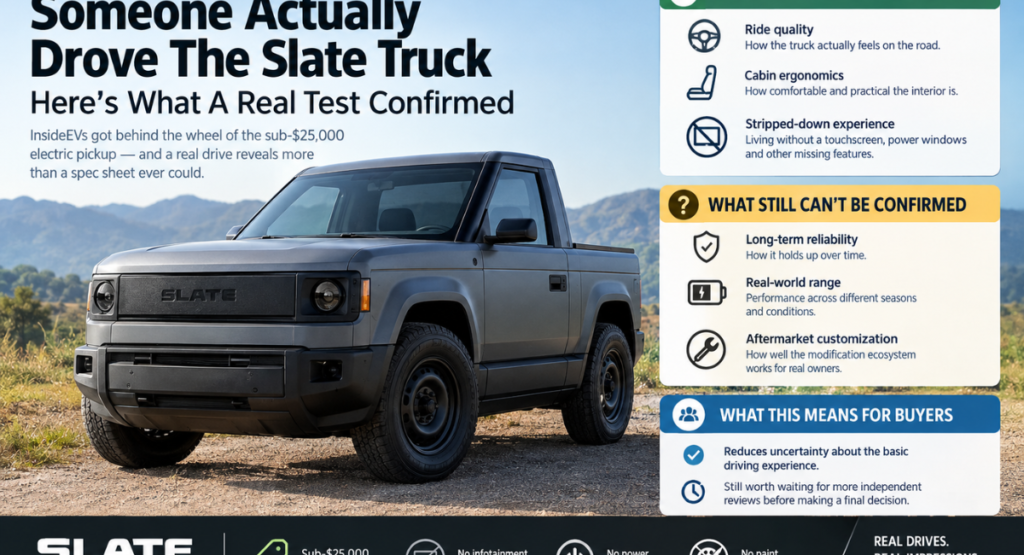
A genuine first drive adds something that tier of coverage cannot: direct impressions of ride quality, cabin ergonomics, and how the truck’s stripped-down feature set actually feels to operate rather than just read about.
Why This Distinction Matters For The Slate Specifically
Slate’s entire value proposition rests on what it deliberately omits: a factory infotainment screen, powered accessories, and paint, all cut to hit its sub-$25,000 base price aggressively.
Those omissions are exactly the kind of detail a spec sheet states plainly but a hands-on test actually evaluates, since living without a touchscreen or power windows reads very differently on paper than it feels during a real drive.
Technician’s Note: Weigh a hands-on first drive’s subjective impressions, like cabin ergonomics and ride comfort, more heavily than a spec-sheet-only preview. Treat both equally only for details a reviewer can verify without driving, like published dimensions or warranty terms.
What A First Drive Still Can’t Confirm About The Slate
A single first-drive event still cannot verify long-term reliability, real-world range across seasons, or how the truck’s customization ecosystem performs once aftermarket accessories reach actual owners.
Slate’s business model depends heavily on that aftermarket customization approach, a feature that, by its nature, cannot be fully evaluated until independent owners begin modifying their trucks after delivery.
What This Means For Buyers Still Deciding
A verified first drive narrows the uncertainty around Slate’s basic driving experience meaningfully, even though it doesn’t answer every question a buyer comparing it against the Ford Fathom might have.
Waiting for additional independent reviews, ideally once more journalists get comparable seat time, continues to make sense before treating any single outlet’s early impressions as the final word on the truck.
Common Questions About The Slate Truck First Drive
Has any outlet actually driven the Slate Truck yet?
Yes. InsideEVs conducted a genuine first drive of the Slate Truck, moving coverage beyond the spec-sheet and reservation-count tier that still applies to competitors like Ford’s unreleased Fathom pickup.
What can a first drive tell buyers that a spec sheet can’t?
A first drive reveals subjective, hands-on details like ride quality and cabin ergonomics, particularly relevant for the Slate given its deliberately stripped-down feature set, which reads differently on paper than it feels to actually drive.
What questions about the Slate Truck remain unanswered even after a first drive?
Long-term reliability, real-world range across seasons, and how Slate’s aftermarket customization ecosystem performs for actual owners all remain unverified, since a single first-drive event cannot test those factors.