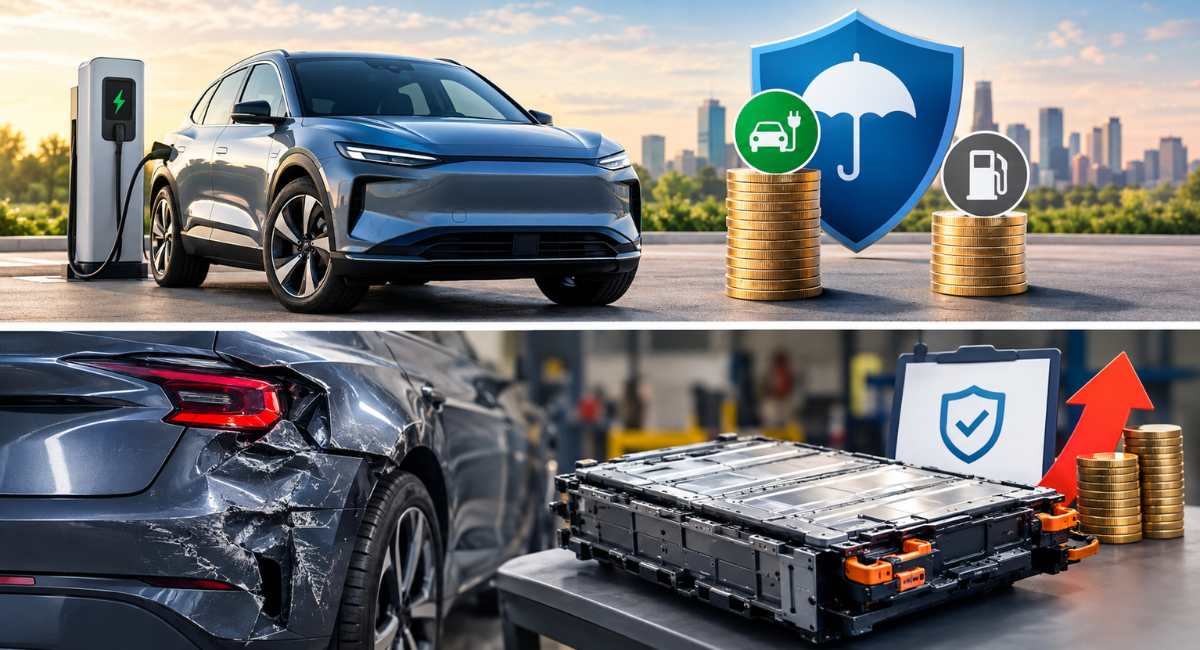
Electric vehicles now cost an average of $3,159 a year to insure with full coverage, against $2,218 for a comparable gas car, a 42 percent gap according to 2026 rate data. That premium surprises plenty of shoppers who budgeted for lower fuel costs but never priced insurance separately. The gap traces to specific, fixable repair-cost factors, not simply to owning something electric.
What The Actual Numbers Show
Insurify’s 2026 data puts average EV insurance at $3,159 a year for full coverage across all model years, compared with $2,218 for gas-powered vehicles, a gap of roughly 42 percent nationally.
That gap widens further on newer models specifically. Recent-model-year EVs average $4,046 annually versus $3,123 for comparable new gas vehicles, a 30 percent premium isolated to newer, less repair-history-tested vehicles.
Why Repair Cost, Not Crash Rate, Drives The Premium
Insurers price EV coverage around specialized repair costs rather than how often EVs crash. Battery pack replacement alone typically runs between $5,000 and $22,000 depending on pack size, representing 30 to 40 percent of a vehicle’s total value.
A collision that lightly compromises a battery housing’s structural integrity often triggers a total-loss declaration on an EV, where the same impact would be a standard repair on a comparable gas vehicle.
Technician’s Note: Ask an insurer directly whether a specific EV’s battery pack qualifies for partial repair or requires full replacement after a moderate collision. That distinction affects premium pricing more than most buyers realize before shopping coverage.
Which EVs Cost The Most And Least To Insure
Tesla and Audi e-tron models rank consistently as the most expensive EVs to insure, with all five Tesla models exceeding $2,800 annually and the Audi SQ8 e-tron reaching $10,402, the highest figure in Insurify’s dataset.
Specialized labor shortages compound the cost further. Proprietary parts and restricted diagnostic software frequently lock independent shops out of EV repairs, pushing owners toward manufacturer service centers charging higher labor rates.
How To Actually Lower An EV Insurance Bill
Raising a comprehensive deductible shifts more minor-repair risk onto the driver, lowering the premium in exchange for a cash reserve to cover smaller claims out of pocket rather than through insurance.
Telematics programs advertise discounts up to 30 to 40 percent, though real-world savings average closer to 10 percent, and state-level audits show nearly 24 percent of participants actually see their rates increase instead.
Common Questions About EV Insurance Costs
Why do EVs cost more to insure than comparable gas cars?
Repair cost drives the gap, not crash frequency. Battery pack replacement runs $5,000 to $22,000 and represents 30 to 40 percent of a vehicle’s value, often triggering a total-loss declaration for damage a gas car would simply repair.
Which EVs are the most expensive to insure in 2026?
Tesla and Audi e-tron models rank highest. All five Tesla models exceed $2,800 annually for full coverage, and the Audi SQ8 e-tron reaches $10,402 a year, the highest figure in Insurify’s 2026 dataset.
Do telematics programs actually lower EV insurance premiums?
Sometimes, but not reliably. Programs advertise 30 to 40 percent discounts, but real-world savings average closer to 10 percent, and state audits show nearly 24 percent of participants see their rates rise instead.