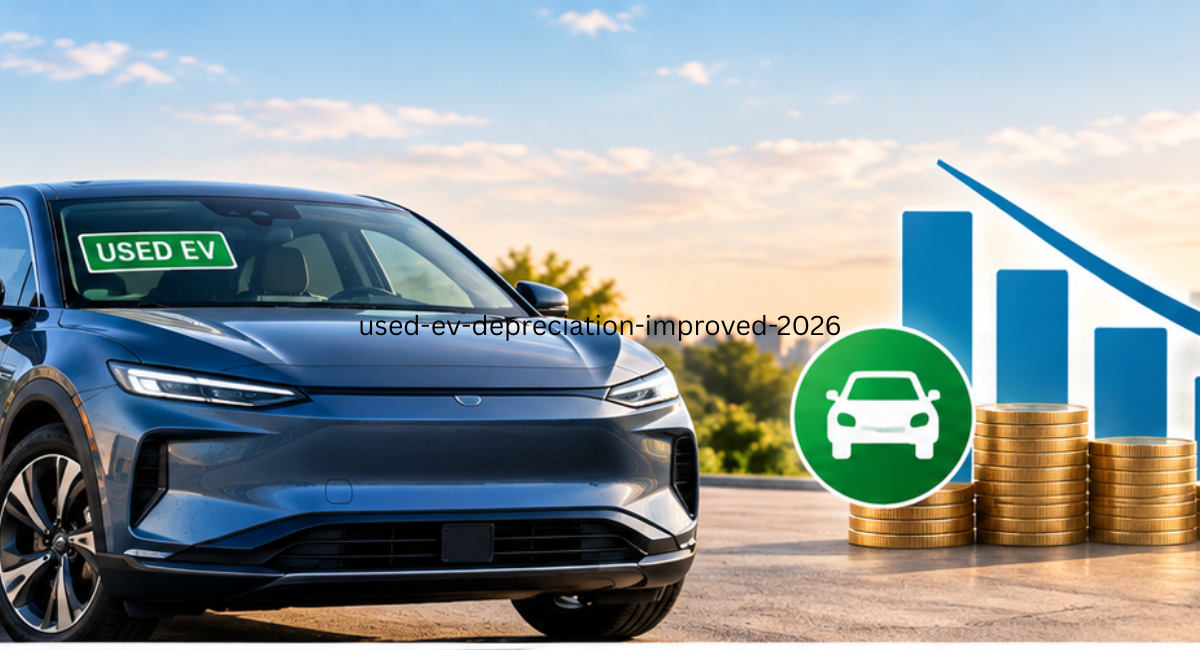
Used EV prices are stabilizing after two brutal years, and the recovery changes the math for anyone shopping the used market right now. The average used EV sold for $34,821 in the first quarter of 2026, just $1,334 more than a comparable used gas car. As recently as early 2023, that gap exceeded $10,000. For buyers, timing this recovery correctly matters more than chasing the absolute lowest price.
How Fast The Gap Actually Closed
The average electric car still loses roughly 57 to 59 percent of its value over five years, according to iSeeCars’ 2026 depreciation study, well above the 41.8 percent average across all vehicle segments.
Despite that steep long-term curve, the near-term picture improved sharply. Three-year EV depreciation across the U.S. used market now sits at roughly 38 to 42 percent of original MSRP, down from 49 to 55 percent peaks recorded in late 2024.
Why The Recovery Is Happening Now
Tighter new-EV inventory following the federal tax credit’s reset, stronger off-lease demand, and a maturing battery-health disclosure standard adopted by most major dealer groups all contributed to the stabilization.
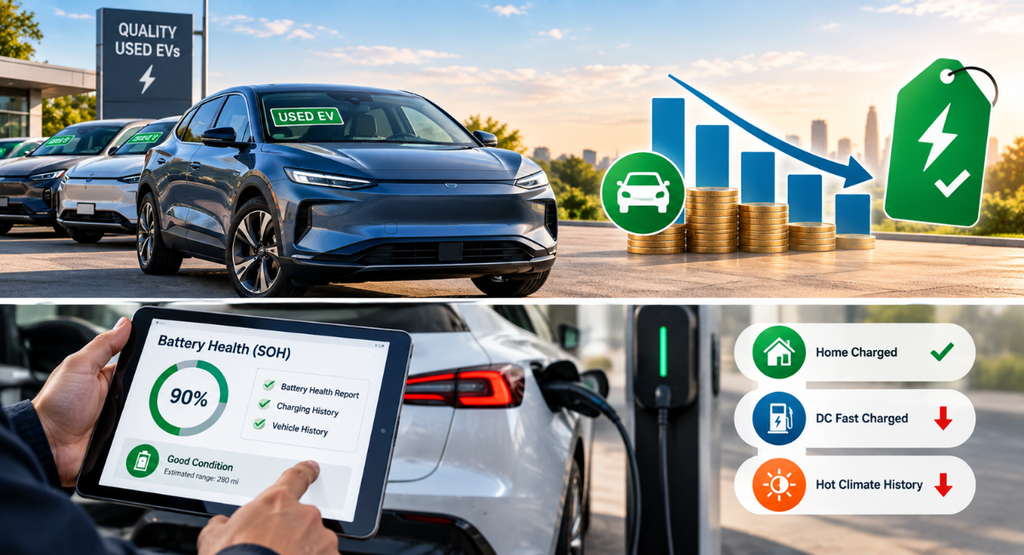
That battery-health disclosure shift matters specifically. Buyers can now verify a used EV’s actual state of health rather than relying on mileage or age alone, letting well-maintained vehicles command a real premium over neglected ones.
Technician’s Note: Request a battery state-of-health, or SOH, report before finalizing any used EV purchase. A vehicle at 88 to 92 percent SOH after three to four years typically retains 8 to 10 years of usable battery life before hitting the roughly 70 percent warranty floor.
How A Vehicle Was Charged Now Affects Resale More Than Age
A used EV with 90 percent of its lifetime miles from DC fast charging sells for measurably less than a comparable, mostly home-charged example, since heavy fast-charging accelerates battery degradation over time.
Climate history factors in too. Vehicles previously registered in Arizona, Texas, or Nevada face steeper battery aging from sustained heat exposure, and used buyers increasingly discount cars from those states accordingly.
What This Means For Buyers Shopping Right Now
For the first time, EV depreciation genuinely rewards how a vehicle was used, not just how old it is, meaning a well-documented, home-charged used EV represents a stronger value proposition than the segment’s scary five-year average suggests.
A 2024-or-newer EV held for five years and treated reasonably now lands at roughly half its original MSRP, nearly matching where a typical mainstream gas car finishes over the same period.
Common Questions About Used EV Depreciation
Has used EV depreciation actually improved in 2026?
Yes. Three-year EV depreciation now sits at roughly 38 to 42 percent of original MSRP, down from 49 to 55 percent peaks in late 2024, driven by tighter new-EV inventory and stronger off-lease demand.
How close is the average used EV price to a comparable used gas car now?
Very close. The average used EV sold for $34,821 in Q1 2026, just $1,334 more than a comparable used gas car, down from a gap exceeding $10,000 as recently as early 2023.
Does how a used EV was charged actually affect its resale value?
Yes. A vehicle with mostly DC fast-charging history sells for less than a comparable, mostly home-charged example, since heavy fast-charging accelerates battery degradation, a factor buyers increasingly price into used EV offers.