


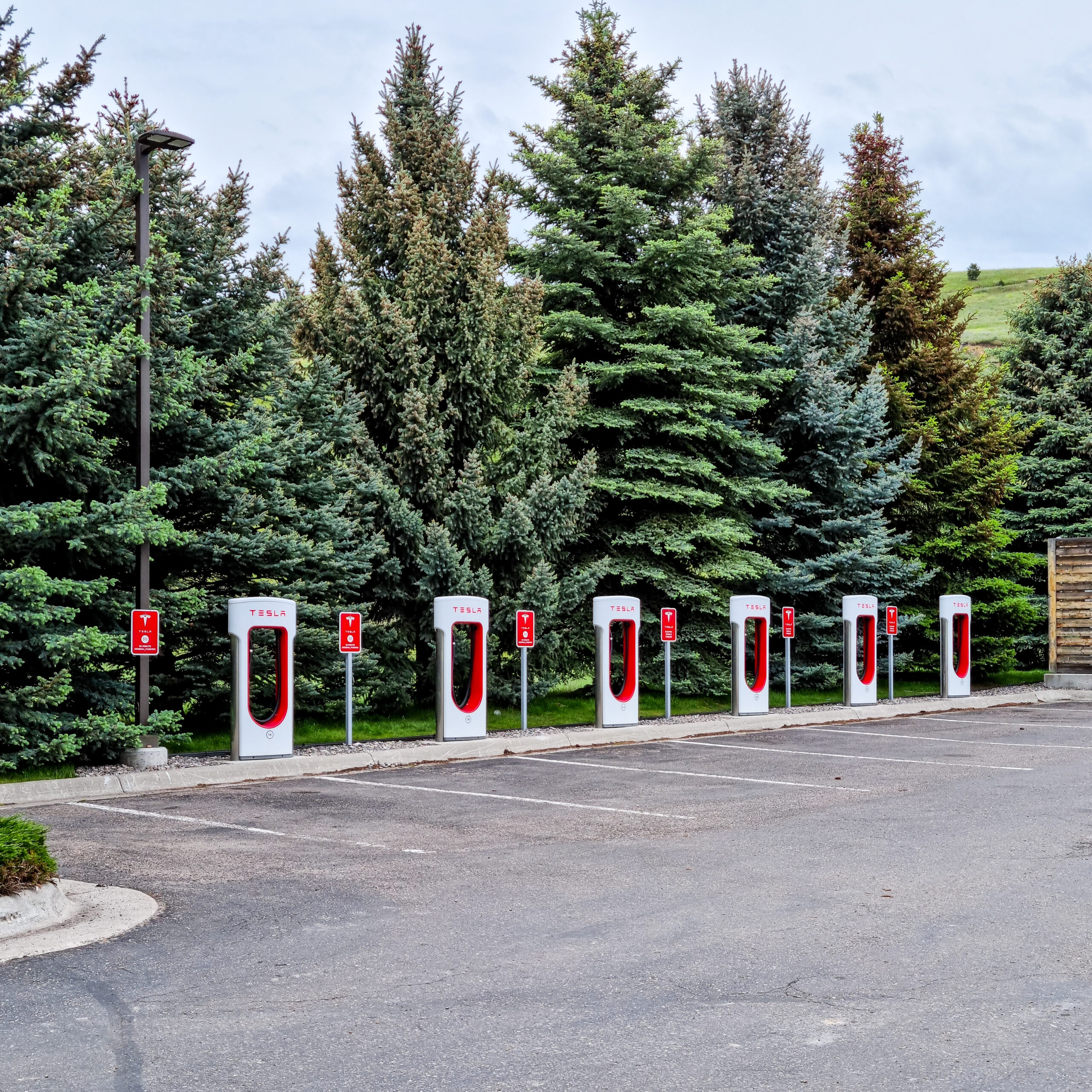
Tesla is building what it’s calling the world’s largest Supercharger station in Yermo, California — over 400 V4 stalls, paired with full commercial amenities like dining and retail space, according to reporting from The Driven and other outlets covering the project. That’s roughly 10 to 20 times the stall count of a typical Supercharger site, built at a single desert location along a heavily traveled corridor between Southern California and Las Vegas.
Why Yermo, and why this big
Yermo sits on Interstate 15, one of the busiest road-trip corridors in the country for Southern California residents heading to Las Vegas, and a natural bottleneck point where EV traffic concentrates during peak travel weekends. Tesla has historically built its largest charging sites at exactly these kinds of chokepoints, where a single under-built station can mean long queues during holiday traffic.
The scale also reflects where Tesla’s charging network has been heading more broadly in 2026: V4 hardware supports higher power delivery and works with both 400V and 800V vehicles, and sites have been growing from the standard 8-to-20-stall layout toward larger hub-style locations as both Tesla’s own fleet and non-Tesla NACS traffic have grown.
A travel center, not just a charging stop
What sets the Yermo site apart isn’t only the stall count — it’s being built with full commercial amenities attached, following the same model Tesla has used at a handful of flagship Supercharger locations that double as rest stops, with food and retail space meant to keep drivers parked (and charging) longer rather than rushing back onto the highway. That’s a deliberate design choice: a 400-stall site with nowhere to eat or wait comfortably would be a much harder sell during a 20-to-30-minute charging session.
What it actually changes for drivers
For most EV owners, a single giant station hundreds of miles from home won’t change daily charging habits. Its real value shows up during holiday weekends and peak road-trip periods, when corridor charging sites are most likely to queue up — a 400-stall site essentially eliminates the queue problem at this one chokepoint, even if it doesn’t solve charging congestion anywhere else on the route.
It’s also a signal of where Tesla expects demand to keep growing: building at this scale only makes financial sense if the company is confident EV road-trip traffic through this corridor keeps climbing, not leveling off.