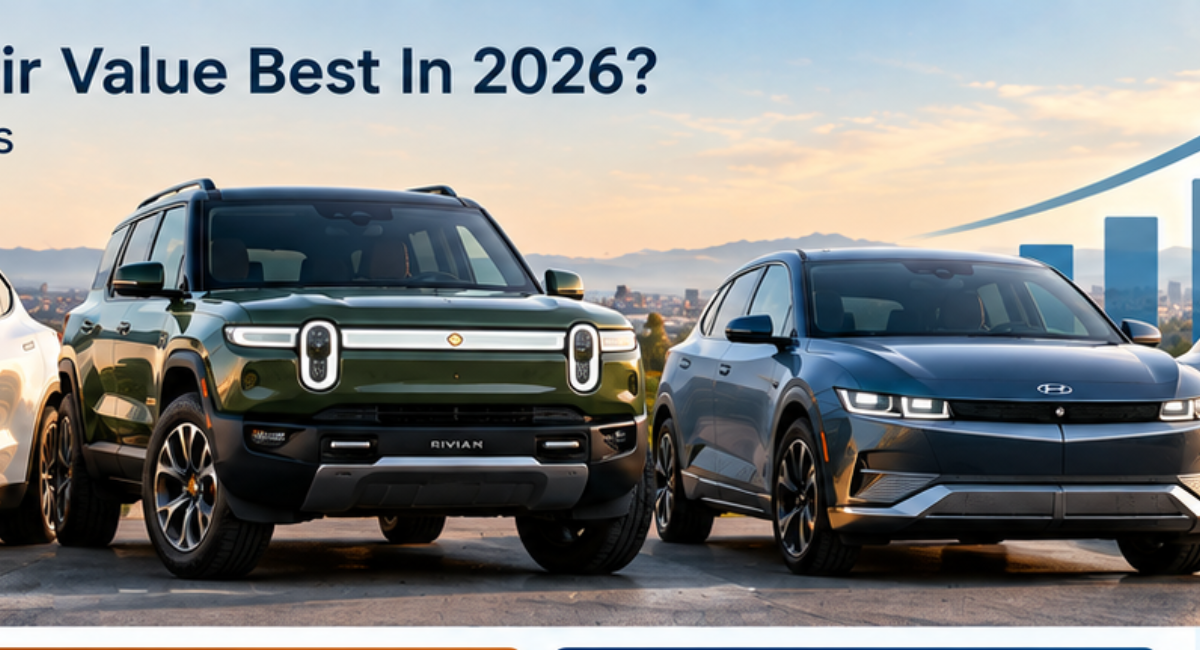
Resale value data across 80 EV models shows a clear split forming in 2026. Tesla’s long-standing resale lead is real but narrowing, Rivian’s low production volume keeps its values unusually firm, and Hyundai and Kia have closed much of the gap that once separated Korean EVs from the segment’s traditional leaders. Comparing the three approaches reveals why resale strength comes from very different sources depending on the brand.
Where Tesla Still Leads, And Why That Lead Is Shrinking
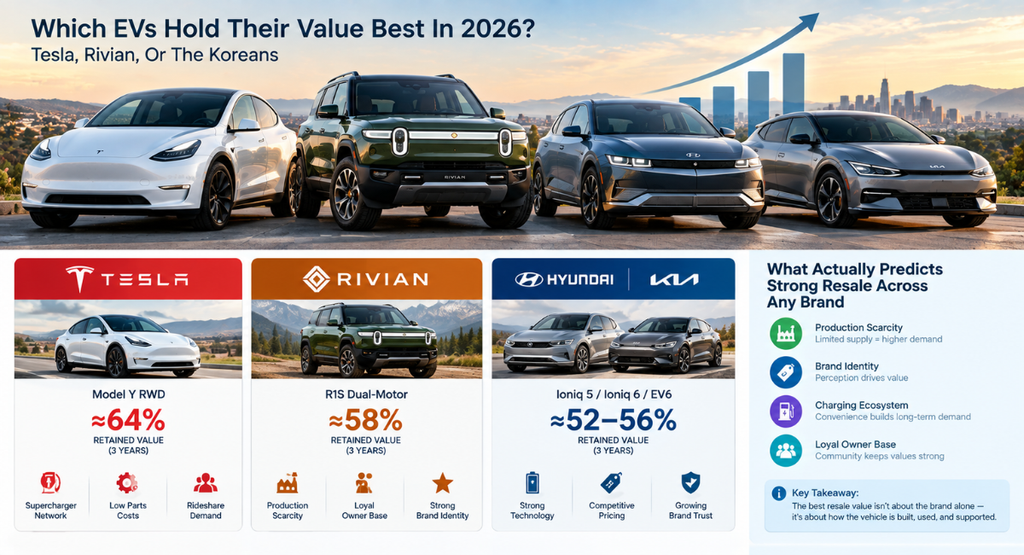
The Tesla Model Y RWD leads the mainstream segment at roughly 64 percent retained value after three years, helped by Supercharger network access, low parts costs, and steady rideshare demand keeping used-market appetite consistently high.
That lead has narrowed compared to prior years, since Tesla’s own high production volume floods the used market with supply, and frequent new-car price adjustments have repeatedly whipsawed used Tesla values downward in response.
Why Rivian’s Resale Numbers Stay Unusually Strong
The Rivian R1S Dual-Motor holds around 58 percent value on lower-mileage units, a genuinely strong figure for an $80,000-plus vehicle, driven by production scarcity and an unusually loyal owner base rather than mass-market volume.
Some resale trackers put the R1S even higher, near 73 percent after two years specifically, reflecting how differently limited-volume vehicles behave in the used market compared to high-volume models like the Model Y or Model 3.
Technician’s Note: Compare resale figures from the same tracking source and the same age window when cross-shopping models. Different trackers report meaningfully different percentages for the same vehicle, since methodology and sample size vary significantly between them.
How Hyundai And Kia Closed The Gap
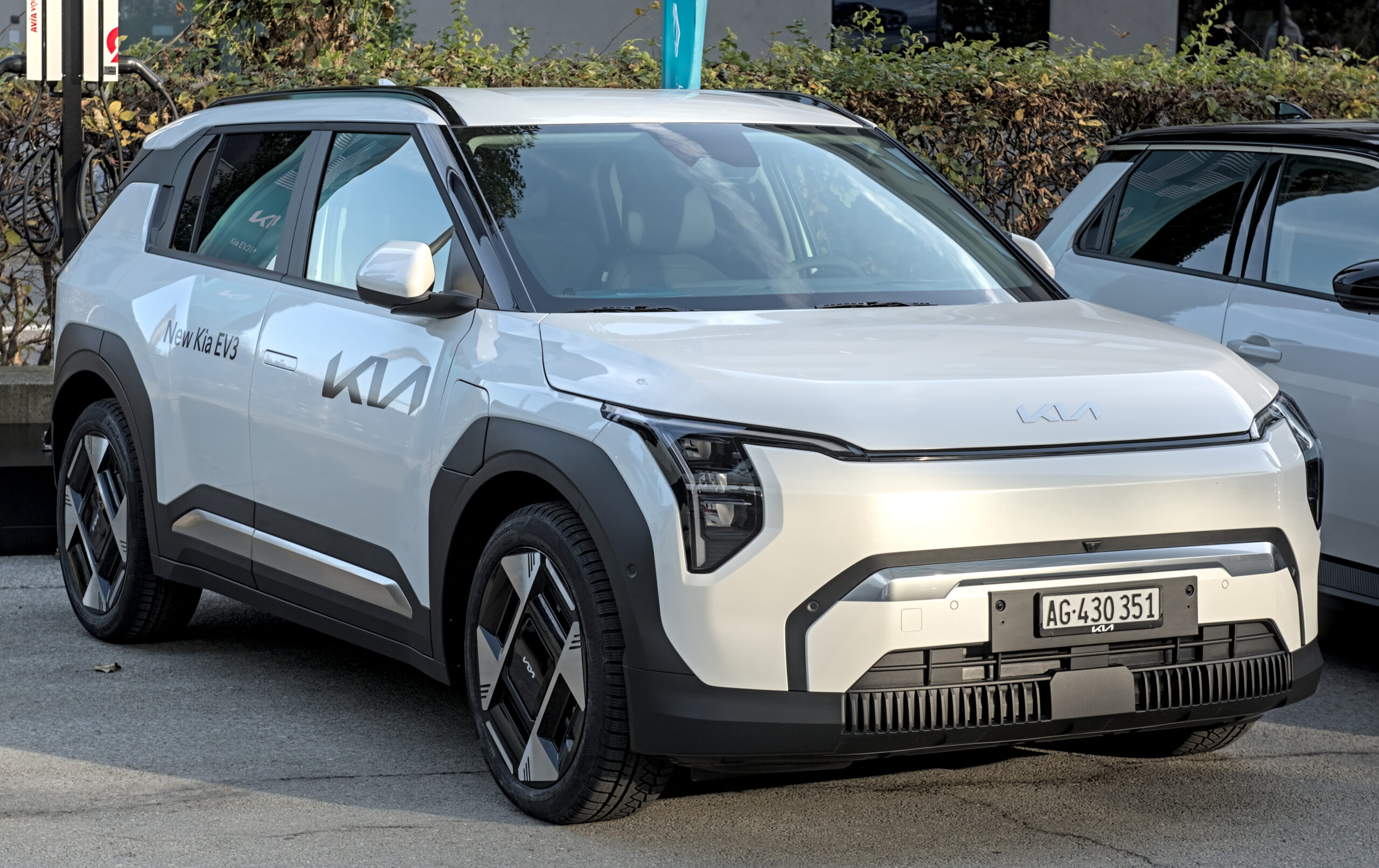
Hyundai and Kia’s EV lineup, including the Ioniq 5, Ioniq 6, and EV6, has climbed the resale rankings substantially, driven by strong underlying technology, competitive original pricing, and improving brand trust in the used-EV market specifically.
That improvement reflects a broader shift, where buyers increasingly evaluate a used EV’s actual battery health and charging capability rather than defaulting to brand reputation alone when comparing resale prospects.
What Actually Predicts Strong Resale Across Any Brand
Production scarcity, brand identity, and either a strong charging ecosystem or a genuinely loyal owner base consistently predict which vehicles hold value best, regardless of which specific automaker builds them.
A vehicle lacking all three factors, even from an otherwise respected brand, typically depreciates closer to the segment’s steeper average rather than matching the standout performers in any given resale comparison.
Common Questions About Best Resale Value EVs
Which EV currently holds its value best in the mainstream segment?
The Tesla Model Y RWD leads at roughly 64 percent retained value after three years, helped by Supercharger access, low parts costs, and steady rideshare demand, though that lead has narrowed in recent years.
Why does the Rivian R1S hold value so well despite its high price?
Production scarcity and a loyal owner base drive the R1S’s strong resale, with figures ranging from roughly 58 to 73 percent depending on the tracking source and mileage, unusually firm for an $80,000-plus vehicle.
Have Hyundai and Kia EVs closed the resale gap with Tesla and Rivian?
Substantially, yes. Models like the Ioniq 5, Ioniq 6, and EV6 have climbed the resale rankings, driven by strong technology, competitive original pricing, and growing buyer trust in the used-EV market.