






Ford didn’t reach a $28,350 electric truck by cutting features. The company redesigned how the vehicle gets built. A new process Ford calls ‘assembly tree’ manufacturing, combined with cell-to-structure battery integration, does most of the cost-cutting work traditionally invisible to a buyer scanning a spec sheet.
What Assembly Tree Manufacturing Actually Changes
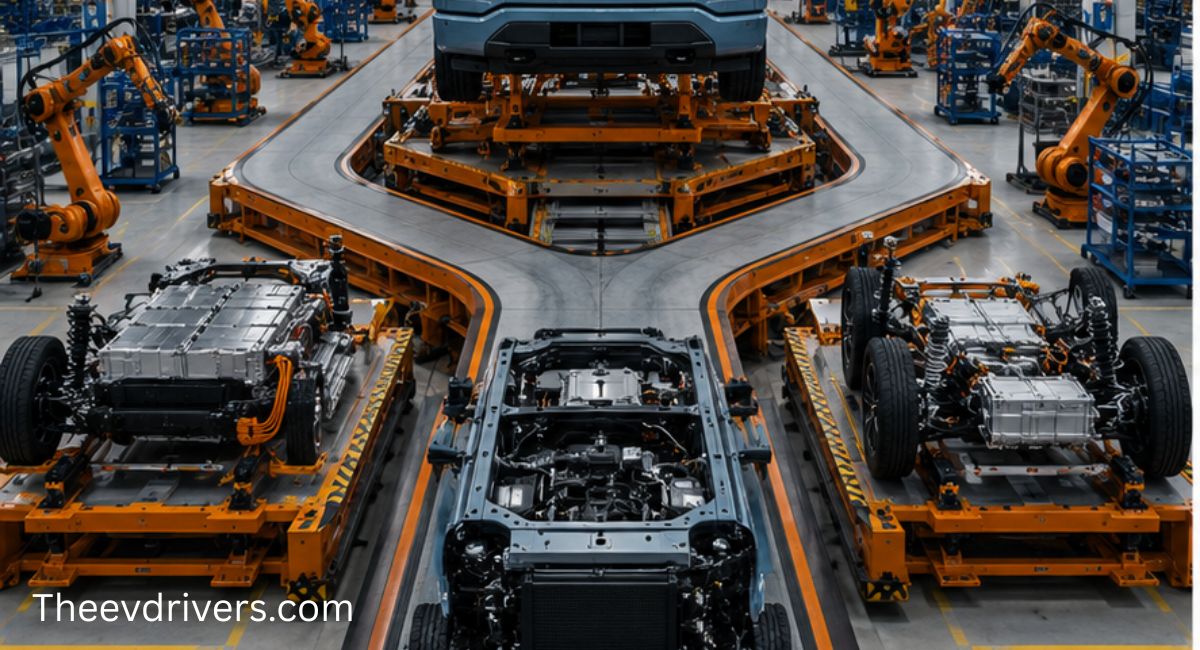
Traditional automotive assembly moves a vehicle down a single, linear line, with every station adding parts in sequence. Ford’s assembly tree process instead builds major sub-assemblies in parallel before merging them, similar to branches meeting at a trunk.
That parallel structure shortens the vehicle’s overall assembly time and reduces the amount of factory floor space and station-to-station handoff time a traditional linear line requires, translating directly into lower per-vehicle manufacturing cost.
How Cell-To-Structure Battery Design Cuts Cost Further
Cell-to-structure design integrates battery cells directly into the vehicle’s structural floor, eliminating a separate battery pack housing that adds weight, parts count, and assembly steps in a traditional EV design.
The Fathom’s 400-volt lithium-iron-phosphate, or LFP, battery system pairs with this structural approach. LFP chemistry itself costs less than the nickel-based chemistries used in many competing EVs, adding a second layer of cost savings beyond the structural design.
Technician’s Note: LFP batteries generally accept slightly slower peak DC fast-charging speeds than nickel-based chemistries, though they typically offer better longevity and reduced fire risk. That tradeoff is worth understanding before assuming cost savings come free of any performance difference.
Where Ford’s LFP Batteries Actually Come From
Ford’s BlueOval Battery Park in Marshall, Michigan, a $3 billion facility, began pre-production ahead of full-scale output, and will supply the Fathom’s battery cells domestically rather than relying on imported cells.
That facility marks the first U.S. EV battery plant producing lithium-iron-phosphate cells at industrial scale, a distinction that matters given current tariff pressure on imported battery components discussed across the EV industry broadly.
Why This Manufacturing Story Matters Beyond The Fathom
Ford’s assembly tree process and cell-to-structure design apply to its broader Universal EV Platform, not just the Fathom specifically. That platform is expected to underpin additional SUVs, a sedan, and a van in the years following the Fathom’s launch.
If the manufacturing approach delivers on its promised savings at scale, it could influence how competing automakers approach affordable EV manufacturing going forward, beyond whatever specific vehicle Ford builds on the platform next.

Common Questions About Ford’s Assembly Tree Manufacturing
What is ‘assembly tree’ manufacturing?
It’s Ford’s term for building major vehicle sub-assemblies in parallel before merging them, rather than moving a vehicle down one linear assembly line. That parallel structure reduces assembly time and floor space compared to traditional manufacturing.
Does the Ford Fathom’s LFP battery charge as fast as other EV batteries?
Generally somewhat slower at peak DC fast-charging speeds compared to nickel-based battery chemistries, though LFP batteries typically offer better long-term durability and reduced fire risk as a tradeoff.
Where does Ford source the Fathom’s battery cells?
From Ford’s own BlueOval Battery Park in Marshall, Michigan, a $3 billion facility and the first U.S. EV battery plant producing lithium-iron-phosphate cells at industrial scale, supplying the Fathom domestically.