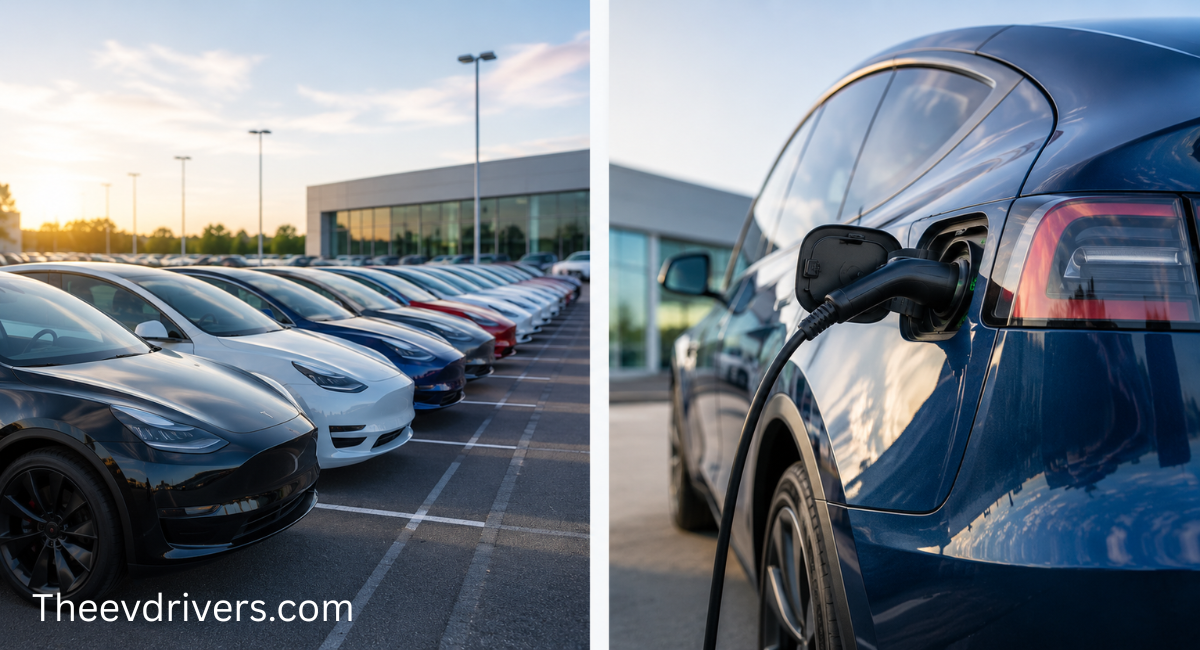





The federal EV tax credit vanished on September 30, 2025. Overnight, the price gap between new and used electric cars widened. Average new EV transaction prices topped $51,000 by January 2026, industry sales data shows. Used EV sales rose noticeably in the same stretch, year over year. That split is not a coincidence. It reflects a direct reaction to lost federal support.
What Actually Changed When The Credit Expired
The One Big Beautiful Bill Act ended both federal EV credits on the same date. New EVs lost their up-to-$7,500 credit. Used EVs lost their up-to-$4,000 credit, with no phase-out window. Buyers who signed binding contracts before September 30 kept their eligibility under IRS guidance. Everyone shopping afterward lost the discount completely.
There is no federal replacement program as of mid-2026. A handful of states still run their own rebates, and some automakers offer manufacturer-funded discounts to fill part of the gap. None of these come close to matching the old federal number on a typical purchase.
Where The Used Market Picked Up The Slack
New EV prices climbed as the point-of-sale discount disappeared, pushing the effective cost of a new electric car up by thousands. Buyers priced out of that jump did not abandon EVs. They shifted toward the used market instead, where depreciation had already done a version of the tax credit’s job.
Popular used models now sell well under $25,000, the same rough threshold the old federal used-EV credit targeted. A used compact hatchback or crossover in that range can undercut a comparable new EV by tens of thousands of dollars, even without any credit attached.
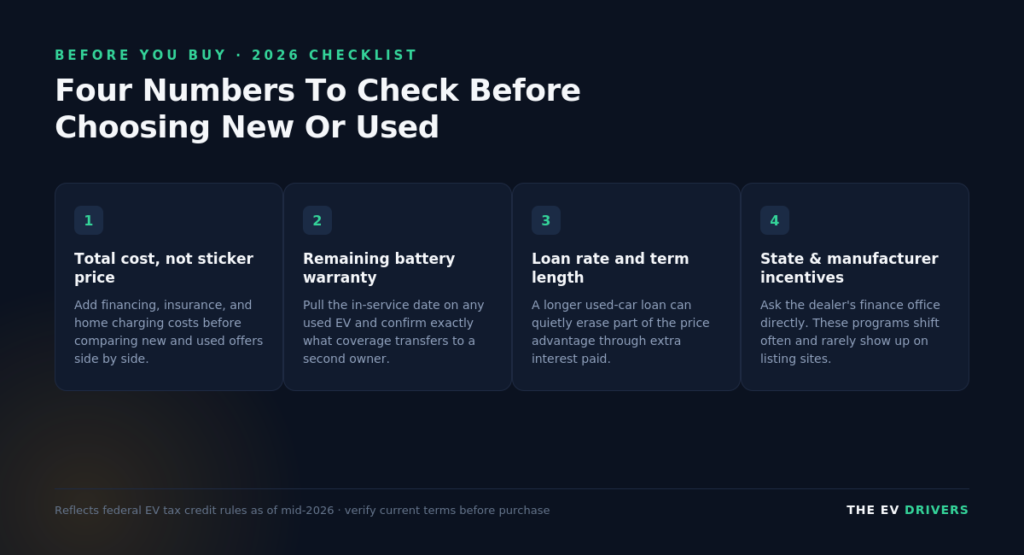
Technician’s Note: Run the math on total cost, not sticker price alone. A three-year-old EV often carries a shorter remaining battery warranty window than buyers assume, so pull the in-service date and confirm what coverage transfers before signing anything.
New Vs. Used: A Concrete Comparison
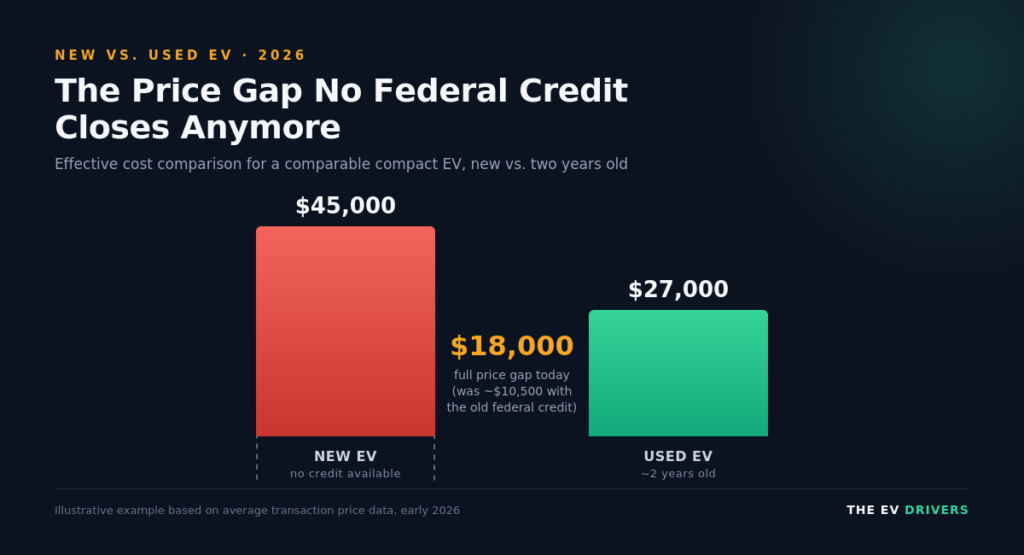
Picture a shopper choosing between a new compact EV near $45,000 and a two-year-old version of the same model near $27,000. Before October 2025, the federal credit could shave $7,500 off the new car, narrowing that $18,000 gap to roughly $10,500. After the credit ended, the full $18,000 gap stands with nothing to close it.
That shift changes the calculation for anyone cross-shopping new and used. The used option now carries a larger built-in advantage than it did a year earlier, purely because the new side lost its discount.
What Still Helps Offset The Gap
Financing terms matter more without a federal credit softening the price. Buyers should compare interest rates and loan lengths side by side for new and used offers, since a longer used-car loan can erase part of the savings in total interest paid. Home charging costs and lower used-EV insurance premiums can also narrow the real ownership gap over several years.
Consult a dealer’s finance office directly for any remaining state or manufacturer incentive, since those programs shift often and rarely appear consistently across listing sites.
Common Questions About New Vs. Used EVs In 2026
Does any federal EV credit still exist for used electric cars? No. The used EV credit, worth up to $4,000, ended September 30, 2025, alongside the new-vehicle credit. Vehicles purchased after that date do not qualify under current federal law, regardless of price or income eligibility.
Why did used EV prices not spike the same way new EV prices did? Used EV values already reflect depreciation, which had been pushing prices down for years. That existing discount gave used EVs room to absorb new demand without matching the new-vehicle price increase seen after the credit ended.
Is a used EV’s battery warranty still fully transferable to a second owner? Typically yes, but terms vary by manufacturer and remaining mileage or years. Always request written confirmation of the transferable balance before purchase, since a battery replacement can cost thousands without active coverage.