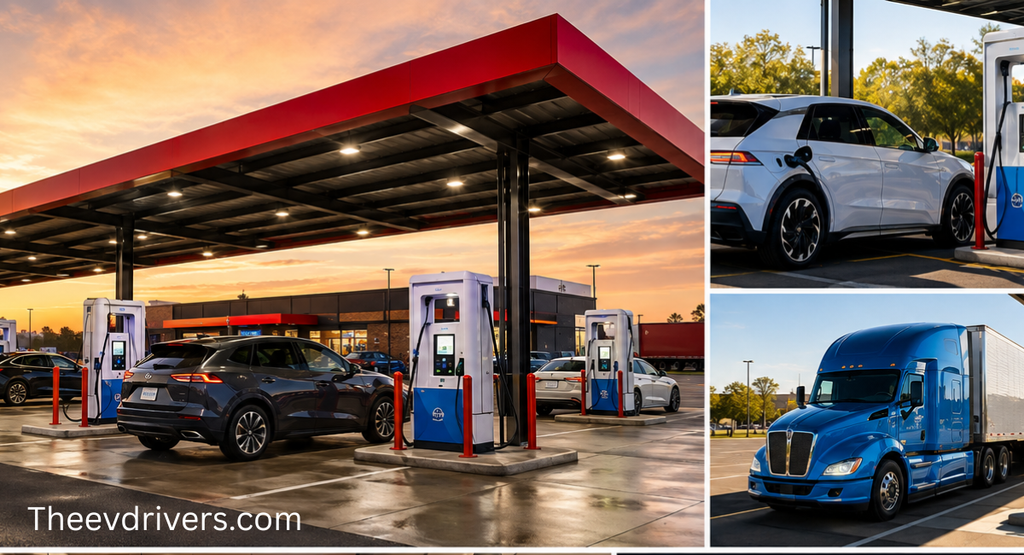




The Pilot Company, GM, and EVgo charging partnership just passed 300 locations nationwide, and its PlugShare rating sits at 9.41 out of 10 as of July 2026. That score sits well above the industry average for public DC fast charging. The design choices behind that number reveal what actually drives reliability at a charging stop, beyond simply installing more chargers.
What The Network Actually Achieved
The Pilot, GM, and EVgo partnership added 50 new sites across 25 states in the first half of 2026 alone, pushing its total past 300 locations and clearing the halfway mark toward its original goal of 500 sites.
That expansion pace matters less than the network’s reported 9.41 out of 10 PlugShare rating as of July 2026, a score that stands out clearly against the broader public charging network’s reported reliability issues.
Why This Network Scores Higher Than Typical Public Charging
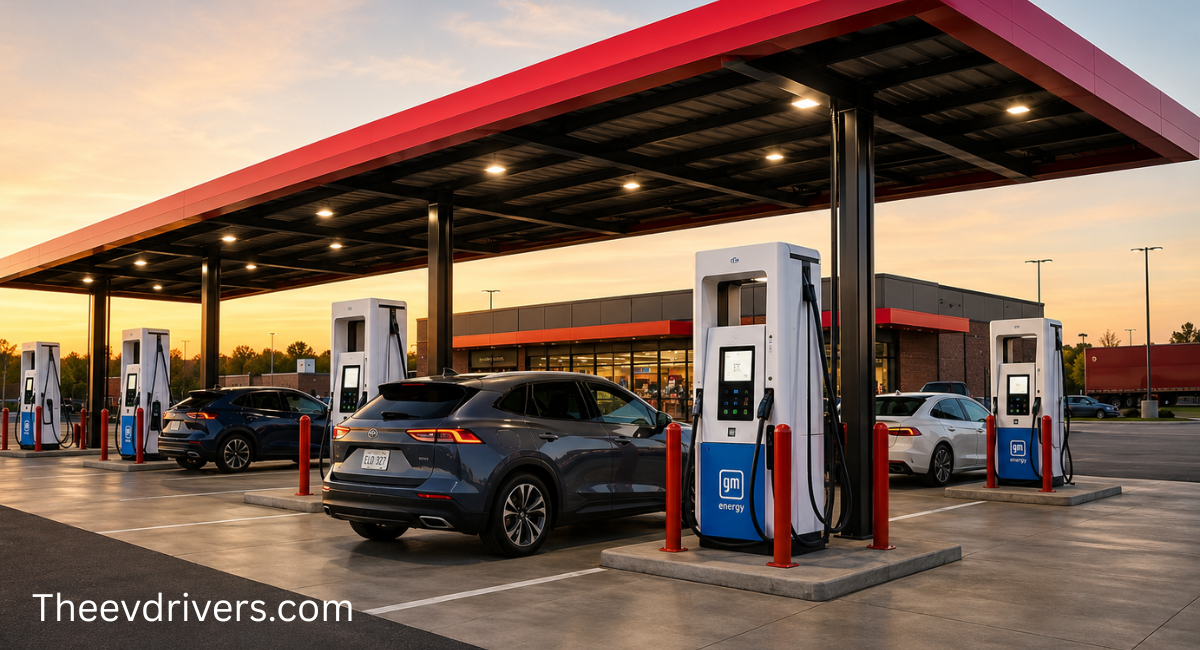
Every location operates as a staffed, 24/7 travel center rather than an unstaffed parking-lot installation, giving drivers access to restrooms, food, and on-site staff who can flag an equipment issue in real time.
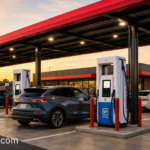
Weather-protected charging canopies and pull-through stalls designed for vehicles towing trailers address specific pain points road-trip drivers report far more often than typical urban charging locations account for.
Technician’s Note: A high PlugShare score reflects driver-reported experience at a specific network, not a guarantee every individual stall performs identically. Checking recent check-ins at a specific location remains worthwhile even on a highly rated network.
How This Compares To The Reliability Problem Drivers Actually Report
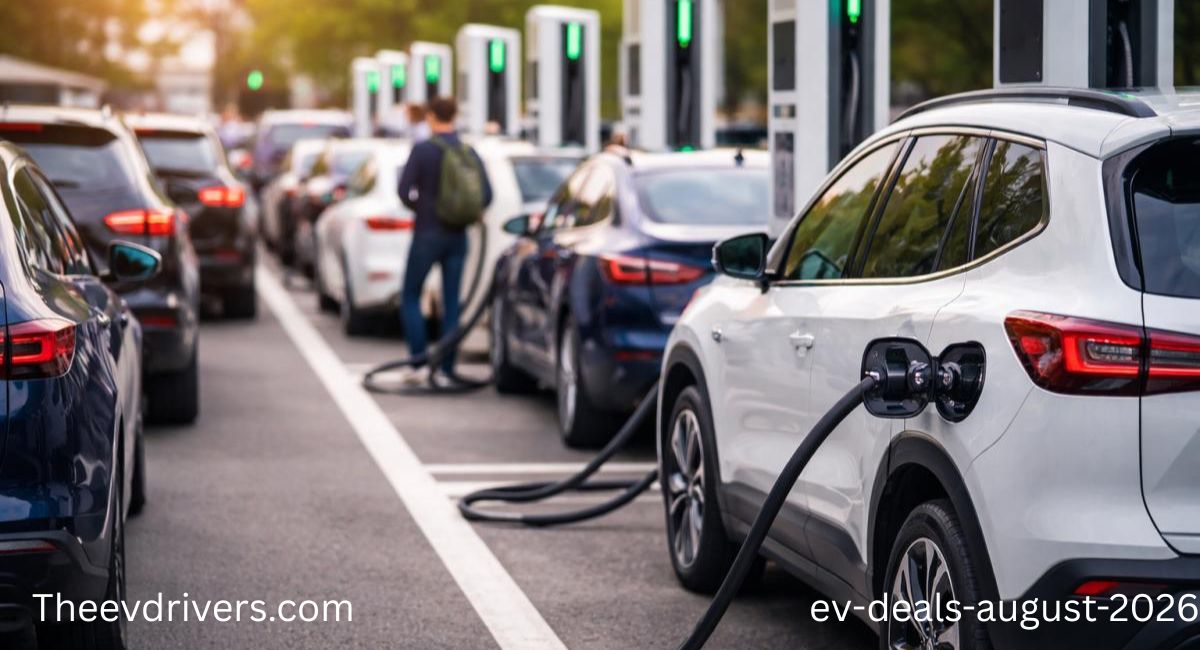
Independent tracking has found that a meaningful share of public DC fast-charging visits end without a successful charge, often due to broken equipment rather than a driver error or unavailable stall.
A staffed, travel-center-anchored model addresses that failure mode more directly than an unstaffed installation can, since on-site staff can identify and report a malfunctioning unit before it strands the next driver in line.
What This Means For Route Planning
The network already supports several long-distance corridors, including San Antonio to Jacksonville, Nashville to Charleston, and Detroit to Tampa, giving road-trip drivers a specific, higher-reliability option along those routes.
Checking whether a planned route passes through one of these staffed locations, rather than defaulting to the nearest charger regardless of network, can meaningfully reduce the risk of an unreliable stop on a longer trip.
Common Questions About The Pilot/GM/EVgo Network
What is the Pilot, GM, and EVgo charging network’s current reliability score?
The network reported a 9.41 out of 10 PlugShare rating as of July 2026, a score well above typical public DC fast-charging reliability, according to the companies’ own reporting.
Why does a staffed travel-center charging network score higher on reliability than typical stations?
On-site staff at 24/7 locations can identify and report malfunctioning equipment in real time, addressing a common failure mode where broken chargers strand drivers without any local staff to flag the issue.
How many locations does the Pilot, GM, and EVgo charging network currently operate?
The network passed 300 locations by mid-2026 after adding 50 new sites across 25 states in the first half of the year, more than halfway toward its original goal of 500 sites.