Winter testing season exposes a gap most EV reviews never quantify. Nearly every review covers acceleration and infotainment, but almost none measure how much cabin heating actually costs in real cold. Independent winter testing found consumption jumping an average of 57 percent above rated figures across 14 tested EVs, with some models losing far more range than others.
What Standard Reviews Skip Entirely
Most published reviews test a vehicle once, often in mild weather, and report a single range or efficiency figure. That single test reveals nothing about how the same vehicle performs once outside temperatures drop below freezing.
Cabin heating draws directly from the same battery that powers the drivetrain, unlike a gas vehicle’s engine, which produces heat as a free byproduct of combustion. That structural difference explains most of the real winter range loss.
How Much Range Cold Weather Actually Costs
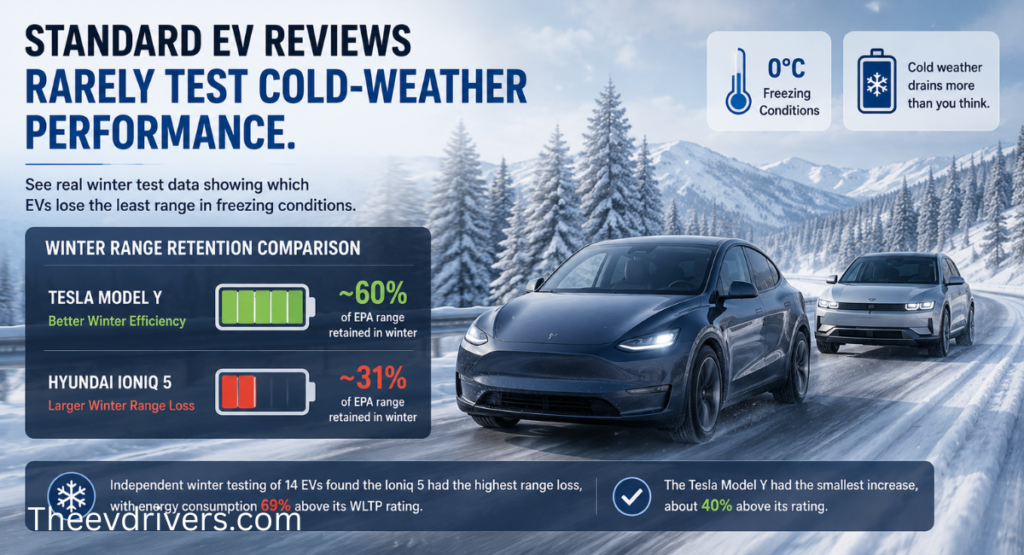
Independent European winter testing simulating a highway drive at 0°C found average winter consumption running 57 percent above WLTP ratings across the tested vehicles. That gap is not a minor seasonal dip; it approaches double the energy per mile in some cases.
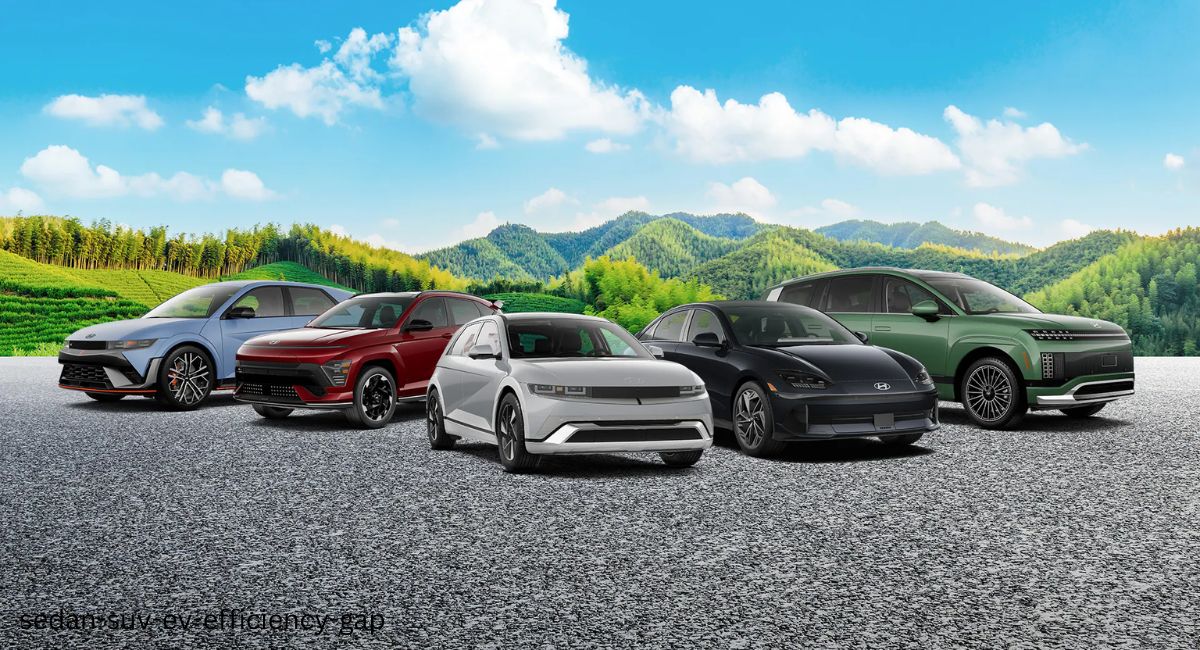
The Hyundai Ioniq 5 posted the steepest increase among 14 tested EVs, at 69 percent above its rated consumption. The Tesla Model Y performed best in that same test, with consumption rising roughly 40 percent, still a significant real-world change.
Technician’s Note: Preconditioning the cabin and battery while still plugged in, before a cold-weather departure, reduces the energy draw pulled from the battery during the drive itself. Most EVs support scheduling this through a companion app.
Why Battery Preconditioning Changes The Comparison
Vehicles equipped with active thermal management systems that preheat the battery before a planned fast-charging stop hold charging speed better in cold weather than vehicles without that feature.
The Audi A6 Avant e-tron topped a recent winter test, posting the smallest range loss and the fastest cold-weather charging recovery. It added roughly 300 kilometers of range in 20 minutes even under winter test conditions.
What A Genuinely Useful Cold-Weather Review Includes
A review that reports only a single mild-weather efficiency number leaves out anyone living somewhere winters actually get cold. A genuinely useful review states both the rated figure and a documented cold-weather test result.
Checking whether a specific review references an actual winter test, rather than assuming a summer-tested efficiency number applies year-round, separates a useful comparison from a marketing-adjacent one.
Common Questions About Cold-Weather EV Range
How much range does cold weather typically cost an EV?
Independent winter testing found average consumption running 57 percent above rated figures across 14 tested EVs, though the exact loss varies significantly by model and how well its battery thermal management performs.
Which EVs handle cold weather best based on independent testing?
The Audi A6 Avant e-tron and Tesla Model Y showed the smallest consumption increases in a recent 14-vehicle winter test, while the Hyundai Ioniq 5 showed the largest increase at 69 percent above its rating.
Does preconditioning the battery actually help in cold weather?
Yes. Preheating the battery and cabin while still plugged in reduces the energy draw taken from the battery during the drive itself, and it typically improves DC fast-charging speed once the vehicle arrives at a cold-weather stop.