

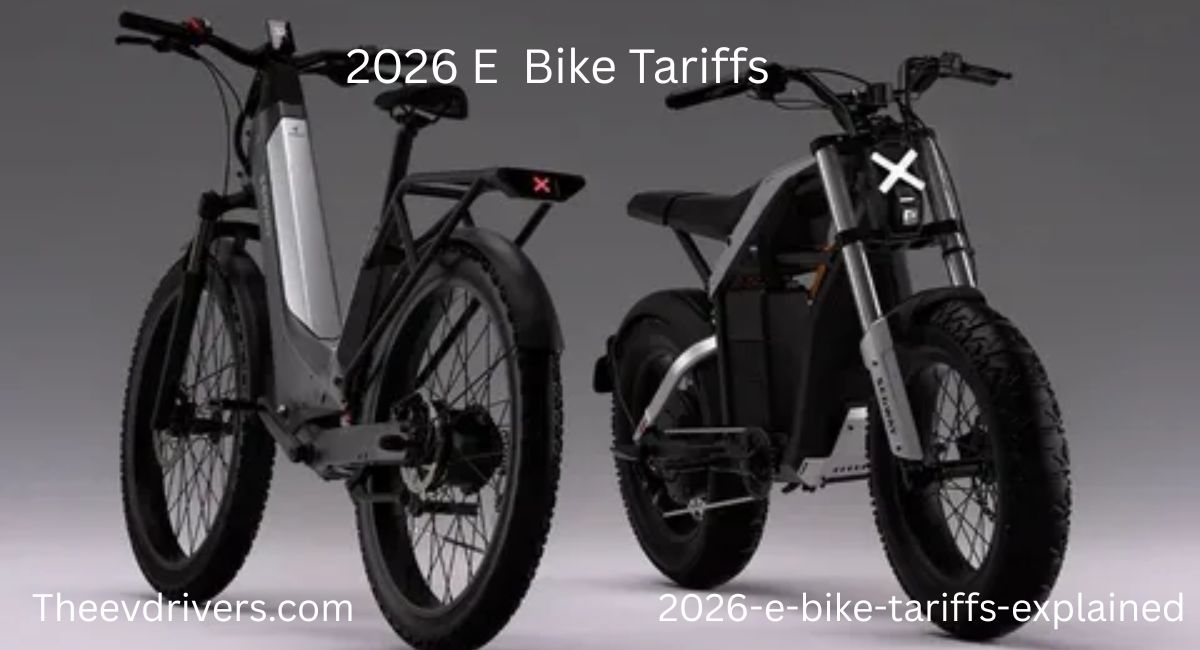
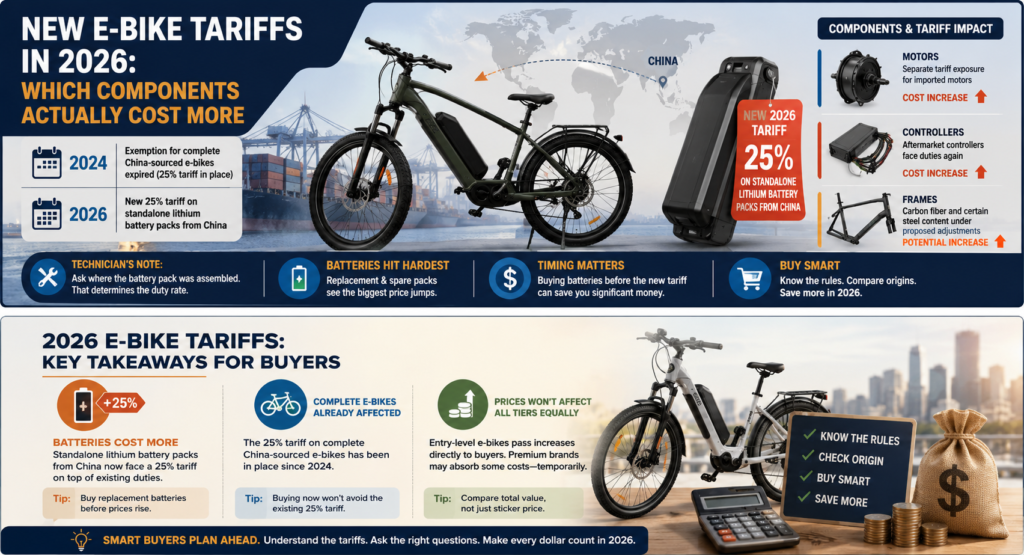
Standalone e-bike battery packs from China face a new 25 percent tariff starting in 2026. That layers on top of duties already in place. Complete China-sourced e-bikes already carry a 25 percent tariff. That exemption expired back in 2024. Those two dates matter separately. Buyers researching sticker prices this year are seeing a second tariff wave. It lands on top of an already elevated cost base.
What Changes Specifically In 2026
Tariff coverage often blurs multiple years of trade policy into one vague warning. Two separate actions matter for e-bike buyers right now. The 2024 change ended a long-standing exemption for complete e-bikes assembled with Chinese content. The 2026 change adds a new duty layer specifically on standalone lithium battery packs.
Batteries Take The Biggest Hit
Standalone lithium battery packs face the steepest increase of any e-bike component category. The new duty pushes the rate on China-made packs to roughly 25 percent. That layers onto whatever base tariff already applied to that battery category. That combination hits replacement batteries and spare packs hardest. Those ship separately from a complete bike, outside any bundled pricing.
Technician’s Note: Anyone due for a replacement battery should price it out before the pack fails completely. A pack ordered ahead of a price change can save real money. That beats an emergency purchase after a total failure.
Motors, Controllers, And Frames Carry Separate Exposure
Motor and controller components imported from China face their own duty exposure. That exposure sits separate from the new battery-specific increase. Complete e-bikes assembled overseas often bundle these parts into one shipment. The tariff on the finished bike partially captures that cost already. Aftermarket motor and controller replacements, bought separately, face the duty a second time.
Frame material adds another layer of complexity. Carbon fiber frames and certain steel content face scrutiny under proposed adjustments. Those rules remain less settled than the battery and complete-bike duties already in force.
Why Buying Now Versus Waiting Changes The Math
A complete bike purchased before a price adjustment locks in the current cost structure. A battery purchased separately, after the new duty applies, carries the fresh increase in full. That gap makes timing matter more for battery purchases than for complete-bike purchases.
Waiting rarely helps on the battery side, since the new rate applies regardless of brand. Waiting can help on the complete-bike side only in specific cases. That happens when a brand shifts assembly outside the affected tariff list.
Technician’s Note: Ask a dealer directly where the battery pack was assembled. That is not always the same country as the bike frame. The battery’s country of origin decides which duty rate applies.
What This Means Across Price Tiers
Entry-level e-bikes run on thinner margins already. They tend to pass tariff increases directly into sticker price. Premium models sometimes absorb part of the increase temporarily. That protects brand positioning at the high end, at least short term. The price gap between budget and premium tiers can widen beyond the hardware cost alone. Comparing sticker price alone misses that shift entirely.
Common Questions About 2026 E-Bike Tariffs
Which e-bike component faces the steepest new tariff increase for 2026? Standalone lithium battery packs imported from China face the newest duty layer, pushing the rate to roughly 25 percent. That specifically targets packs shipped separately from a complete bike, including replacement and spare batteries bought after a pack fails.
Does buying a complete e-bike now avoid the 2026 tariff changes? Complete China-sourced e-bikes already carry a 25 percent tariff dating to 2024, separate from the new 2026 battery duty. Buying now does not avoid that existing rate, though it does avoid the newer increase applied specifically to standalone battery packs.
Why do entry-level e-bikes seem to get more expensive than premium models after a tariff change? Entry-level models run on thinner profit margins, leaving little room to absorb new costs. Premium brands sometimes cover part of an increase temporarily to protect pricing position, which can widen the gap between budget and premium tiers.