


Geely says its next solid-state battery will hit 500 watt-hours per kilogram, roughly double today’s best production cells, enabling more than 1,000 kilometers of range. The announcement landed this week alongside a named materials partner and a 2027 pilot timeline. Several of Geely’s own rivals have made nearly identical claims for the same year, a pattern worth understanding before taking any single number at face value.
What Geely Actually Announced
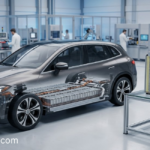
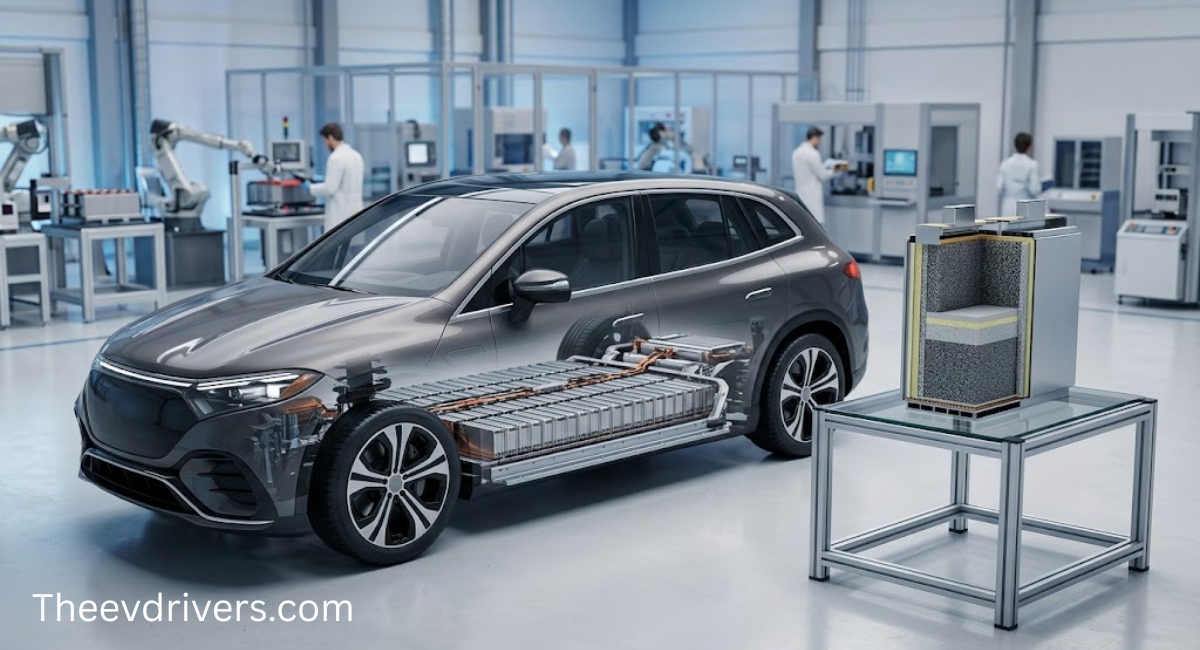
Geely says its top-tier solid-state battery variant will reach 500 watt-hours per kilogram at the pack level, more than double the roughly 250 watt-hours per kilogram its current production Golden Brick liquid batteries achieve at the cell level.
That energy density would enable a claimed range exceeding 1,000 kilometers, or roughly 621 miles, on a single charge, alongside a stated lifespan target of up to 1 million kilometers, or about 621,000 miles.
The Real Details Behind The Headline Number
Geely named Dow Chemical as a materials partner, developing an adhesive for the solid-state cells engineered to remain chemically stable across a temperature range from negative 40 to 120 degrees Celsius.
Real-world validation reportedly began in 2026, with Geely targeting completion of its first fully integrated, all-solid-state battery pack this year, followed by on-road, crash-scenario, and thermal-cycling testing ahead of a 2027 pilot deployment across its Geely Holding brands.
Technician’s Note: Distinguish cell-level energy density from pack-level energy density when comparing battery claims across manufacturers. A pack-level figure already accounts for structural and packaging overhead, making direct comparisons against cell-level figures misleading.
Why Healthy Skepticism Is Warranted Here
Geely has not disclosed its solid-state battery’s specific chemistry, leaving unclear whether the cells use a sulfide or oxide electrolyte, a detail that significantly affects both performance and manufacturing difficulty.
No independent, third-party testing currently backs either the 500 watt-hour-per-kilogram figure or the million-kilometer lifespan claim. Both numbers currently rest entirely on Geely’s own internal reporting.
Why 2027 Keeps Appearing Across The Industry
CATL has separately targeted 2027 for pilot production of its own 500 watt-hour-per-kilogram sulfide solid-state cell, and BYD has targeted the same year for all-solid-state demonstrations ahead of later mass production.
Toyota has pointed toward 2027 to 2028 for its own solid-state debut as well. When every major battery developer names the same pilot year, that convergence signals genuine industry momentum, but it also means none of these specific claims have been independently verified yet.
Common Questions About Geely’s Battery Claim
How does Geely’s claimed 500 Wh/kg battery compare to current EV batteries?
Geely’s current production Golden Brick liquid batteries reach roughly 250 watt-hours per kilogram at the cell level. The claimed 500 Wh/kg solid-state figure, at the pack level, would represent roughly double that density.
Has Geely’s 500 Wh/kg solid-state battery claim been independently verified?
No. As of this announcement, the figure rests entirely on Geely’s own internal reporting. The company has not disclosed the battery’s specific chemistry, and no third-party testing has confirmed the claimed energy density or lifespan.
When will Geely’s solid-state battery actually reach production vehicles?
Geely has targeted 2027 for pilot deployment across its Geely Holding brands, including Volvo, Polestar, Zeekr, and Lotus. The company has not disclosed which specific brand or model will be first.