A retired EV battery doesn’t simply get shredded and thrown away. Modern hydrometallurgical recycling recovers 95 percent of a pack’s lithium and cobalt and 97 percent of its nickel, turning what used to be treated as hazardous waste into a genuine revenue line for recyclers. The global market processing these packs has grown to roughly $6.9 billion in 2026, and the specific chemistry used to recover those materials matters more than most owners realize.
The Actual Process A Retired Battery Goes Through
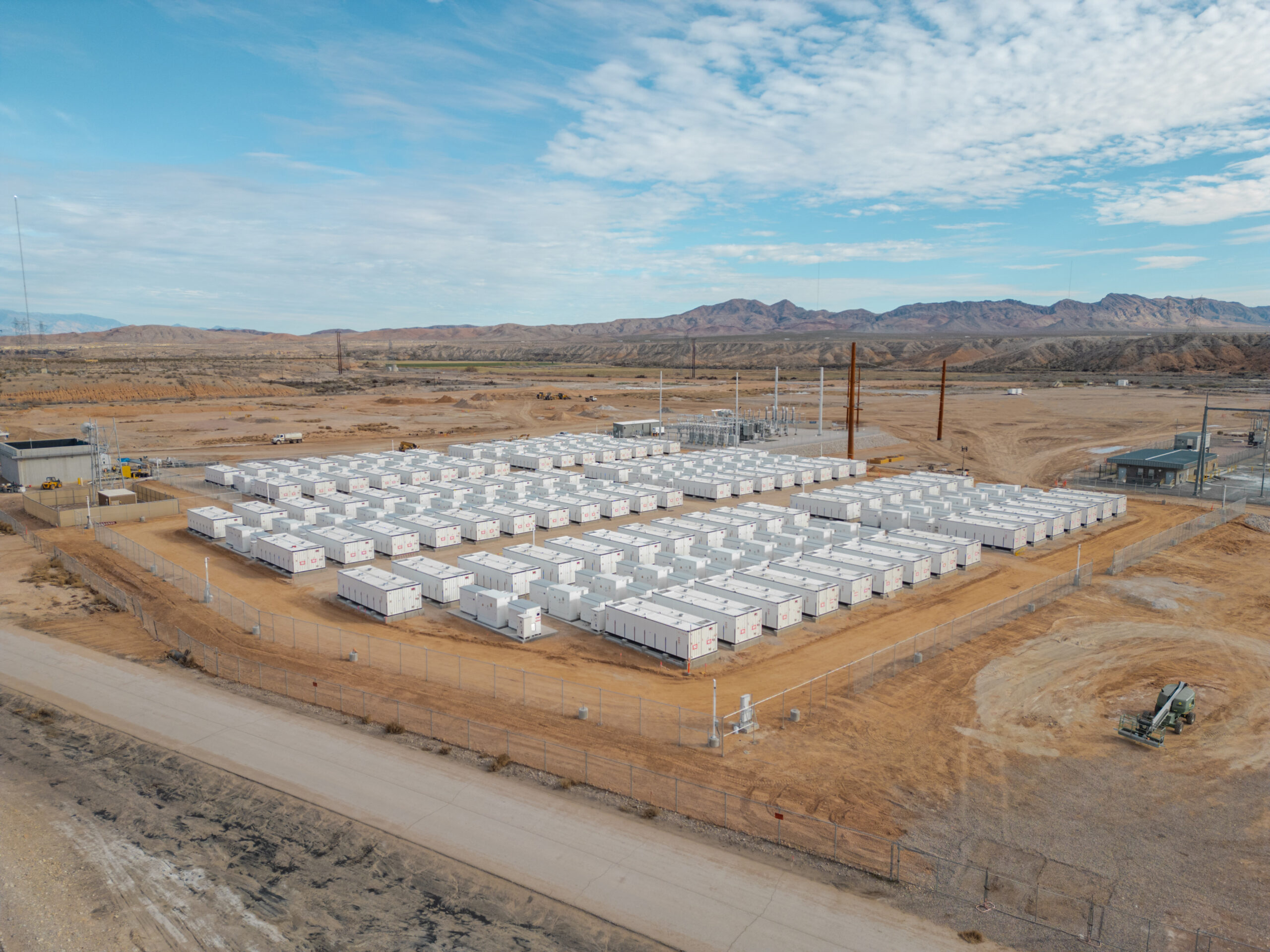
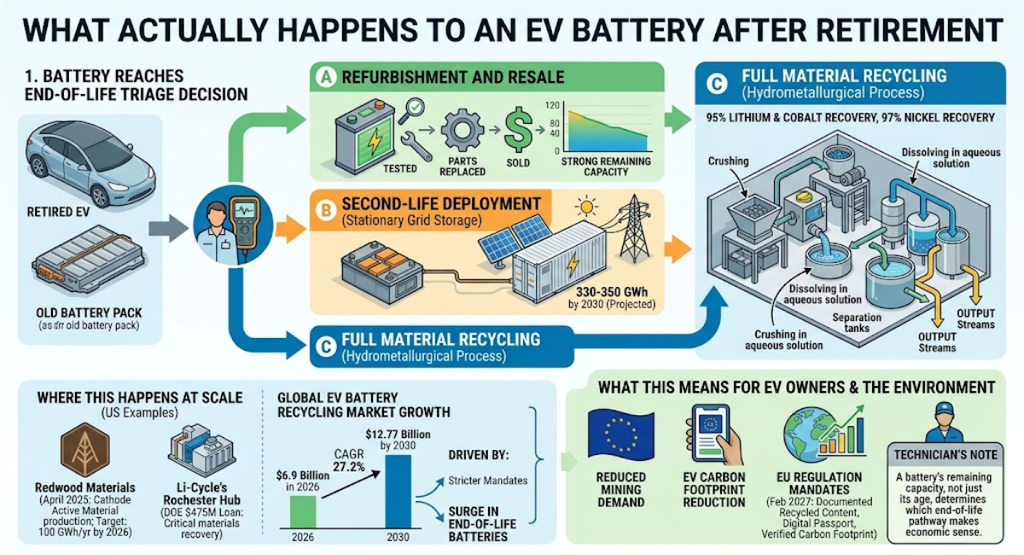
A battery reaching end of life first faces a triage decision between three pathways: refurbishment and resale if capacity remains strong, second-life deployment in stationary energy storage, or full material recycling if the cells are too degraded for either.
Modern hydrometallurgical recycling, the dominant commercial process, dissolves battery materials in an aqueous solution to selectively recover specific metals, achieving roughly 95 percent recovery of lithium and cobalt and 97 percent recovery of nickel.
Where This Actually Happens At Scale In The US
Redwood Materials began commercial-scale production of cathode active material from recycled lithium-ion batteries in April 2025, the first facility of its kind in North America, and targets 100 gigawatt-hours of annual CAM production by 2026, enough to supply roughly 1 million EVs.
Li-Cycle’s Rochester Hub, designed as North America’s first commercial-scale hydrometallurgical facility specifically for critical battery materials, secured a $475 million Department of Energy loan in 2024, the agency’s first loan issued to a battery recycler.
Technician’s Note: A battery’s remaining capacity, not just its age, determines which end-of-life pathway makes economic sense. A pack retaining strong capacity often has more value in second-life energy storage than in immediate material recycling.
Why The Market Is Growing So Fast Right Now
The global EV battery recycling market is projected to grow from roughly $4.88 billion in 2026 to $12.77 billion by 2030, a 27.2 percent compound annual growth rate driven by stricter recycling mandates and a genuine surge in end-of-life batteries reaching the market.
Second-life battery capacity specifically is expected to scale even faster, from roughly 25 to 30 gigawatt-hours in 2025 toward 330 to 350 gigawatt-hours by 2030, as retired packs increasingly get redirected into stationary grid storage rather than full recycling.
What This Means For Current EV Owners
A battery’s eventual recyclability has become a real factor in an EV’s environmental footprint calculation, since high material recovery rates reduce the mining demand associated with producing the next generation of battery packs.
EU regulation is moving fastest on formalizing this connection. Starting February 18, 2027, any EV battery sold in the European Union must carry documented recycled content, a digital passport, and a verified carbon footprint, a standard likely to influence global manufacturing practices.
Common Questions About EV Battery Recycling
How much material does modern EV battery recycling actually recover?
Modern hydrometallurgical recycling recovers roughly 95 percent of a battery’s lithium and cobalt and 97 percent of its nickel, figures that have turned end-of-life EV batteries from a disposal cost into a genuine revenue source.
Where does EV battery recycling actually happen at scale in the United States?
Redwood Materials began commercial-scale cathode active material production from recycled batteries in April 2025, the first such facility in North America, targeting 100 gigawatt-hours of annual production by 2026.
Does every retired EV battery get fully recycled?
No. A battery first faces a triage decision: refurbishment and resale if capacity remains strong, second-life deployment in stationary energy storage, or full material recycling only if the cells are too degraded for either other pathway.