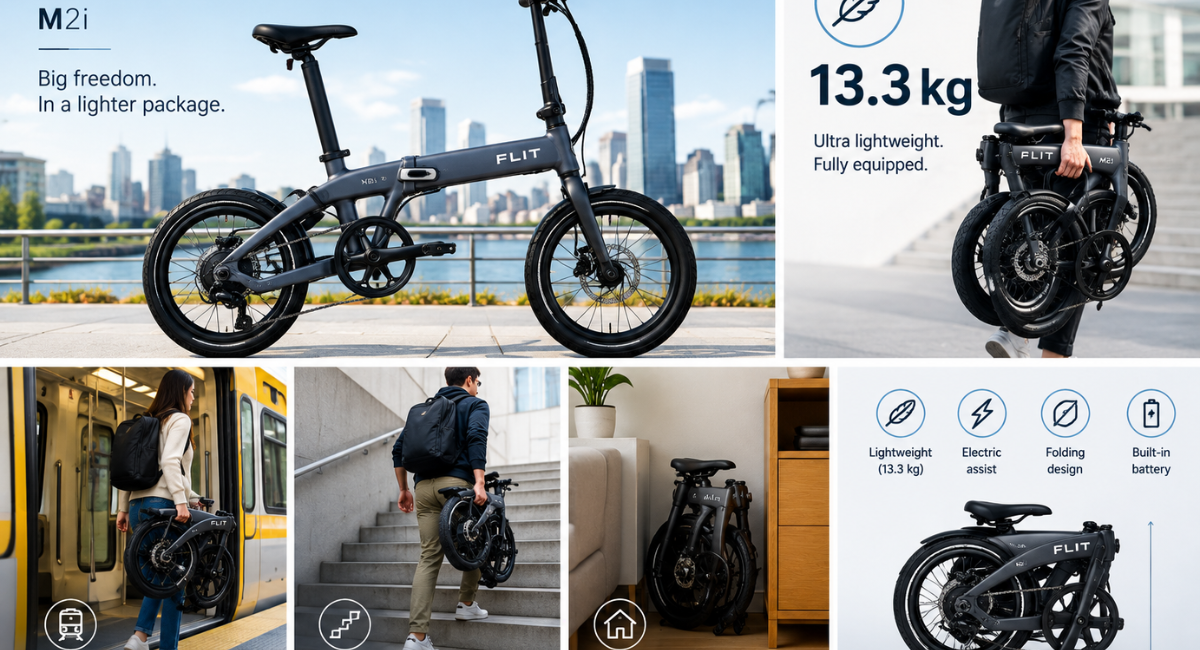
British e-bike maker FLIT just unveiled the M2i, a fully equipped folding electric bike weighing 13.3 kilograms, or about 29.3 pounds. Most folding e-bikes on the market today weigh considerably more once a motor and battery get added. That weight gap changes how a folding e-bike actually gets used day to day, not just how it looks on a spec sheet.
What FLIT Actually Announced
FLIT unveiled the M2i as its latest lightweight folding e-bike, weighing 13.3 kilograms fully equipped, a figure the company positions as a meaningful improvement over typical folding e-bikes in its category.
That weight includes the bike’s motor and battery system, not a stripped-down frame requiring separate battery installation, distinguishing it from lighter frame-only weight figures some manufacturers advertise instead.
Why Folding E-Bike Weight Matters More Than It Sounds
A folding e-bike’s core appeal rests on portability: carrying it up an apartment stairwell, lifting it onto a train, or storing it in a small closet, all tasks a heavier bike makes meaningfully harder regardless of how well it rides.
Most folding e-bikes on the market today weigh well above 20 kilograms once a motor and battery are factored in, making a genuinely sub-15-kilogram option a real outlier rather than a marginal improvement.
Technician’s Note: Check whether a manufacturer’s advertised weight includes the battery and motor, or reflects only the bare frame. Some listings understate real carrying weight by quoting a partial configuration rather than the ride-ready total.
The Tradeoffs A Lighter Build Typically Involves
Reaching a sub-15-kilogram weight for a fully motorized folding e-bike generally requires smaller battery capacity, a lighter-duty motor, or premium lightweight materials that add cost compared to a heavier, more affordable alternative.
A lighter e-bike often trades some range or top-end power for that portability, a reasonable tradeoff for a commuter prioritizing ease of carrying over maximum range, but a real consideration for a buyer wanting both.
Who This Kind Of E-Bike Actually Suits
A rider regularly carrying their e-bike up stairs, onto public transit, or into a small living space benefits disproportionately from a lighter build, even at some cost to range or raw power output.
A rider who stores their e-bike in a garage or ground-floor space and rarely lifts it gains less from a weight-focused design specifically, and may find better value prioritizing range or motor power in a heavier alternative instead.
Common Questions About The FLIT M2i’s Weight
How much does FLIT’s new M2i folding e-bike actually weigh?
The FLIT M2i weighs 13.3 kilograms, or about 29.3 pounds, fully equipped with its motor and battery, a notably light figure compared to most folding e-bikes in its category.
Why does a lighter folding e-bike matter if the motor still does most of the work while riding?
Weight matters most during carrying, not riding: lifting the bike up stairs, onto public transit, or into storage. A heavier folding e-bike makes those routine tasks meaningfully harder regardless of ride quality.
What tradeoffs come with a lightweight folding e-bike like the M2i?
Reaching a sub-15-kilogram weight typically requires smaller battery capacity or a lighter-duty motor, often trading some range or top-end power for the portability benefit.